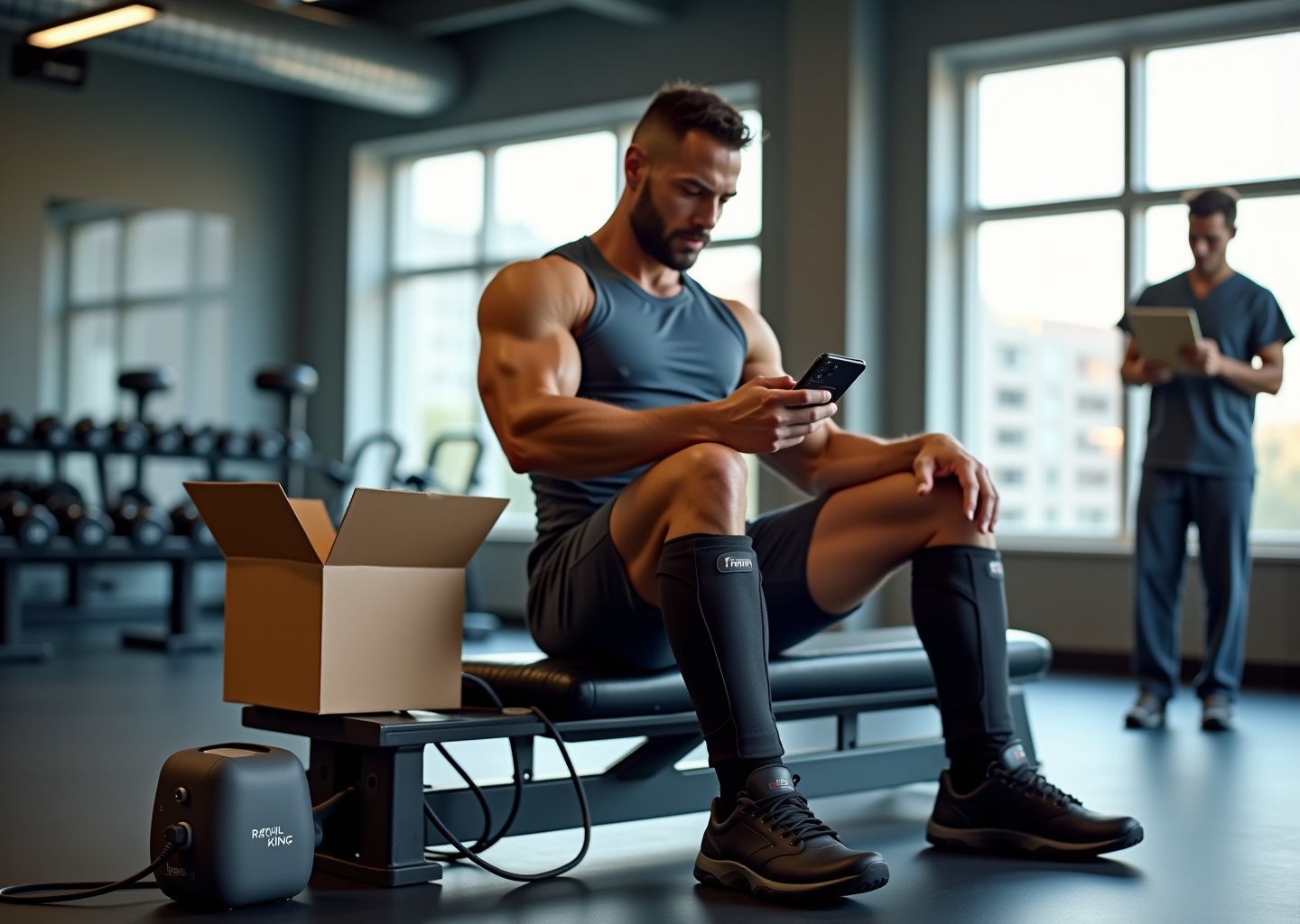
Affordable compression boots promise faster recovery for athletes, but specs and performance vary. This article tests Fit King and Renpho budget models sold on Amazon, explains dynamic compression technology, and shows how to choose and program these systems to reduce soreness, speed healing, and fit real training schedules for athletes of different levels.
How compression boots work and why dynamic compression matters
Before we get our hands on the hardware and pit Fit King against Renpho, it’s crucial to understand what’s happening inside those inflatable sleeves. At first glance, compression boots look like something out of a sci-fi movie, but the technology they use is grounded in well-established physiological principles. They aren’t just squeezing your legs randomly; they are performing a specific, engineered process called dynamic pneumatic compression. This is the core technology used by both budget-friendly brands like Fit King and Renpho and their multi-thousand-dollar competitors. Understanding how it works is the key to using them effectively and safely for athletic recovery.
The fundamental goal is to mimic the body’s natural muscle pump action, but in a more powerful and systematic way. When you walk or run, your calf muscles contract and squeeze the veins in your lower legs, helping to push blood back up toward your heart. After a grueling workout, this natural process can be overwhelmed by inflammation and fluid buildup. Dynamic compression gives this system a major boost. The boots are divided into multiple air chambers, typically four or more, that inflate and deflate in a programmed sequence. This isn’t a static, uniform squeeze like you’d get from a pair of compression socks. Instead, it’s an active, wave-like massage that starts at the feet and moves methodically up toward the thighs, pushing fluids along with it.
Key Terms You Need to Know
To really grasp the differences between models and settings, a few key terms are essential. You’ll see these on product pages and in user manuals, so let’s define them clearly.
- mmHg (millimeters of mercury)
This is the standard unit of measurement for pressure in medical and recovery devices, including blood pressure cuffs. It provides a precise way to quantify the force being applied to your limbs. Consumer boots like those from Fit King and Renpho typically operate in a range of about 30 to 150 mmHg. - PSI (pounds per square inch)
While less common in this context, PSI is another unit of pressure you might encounter. For reference, 1 PSI is roughly equal to 51.7 mmHg, so the numbers will look very different. Stick to mmHg for accurate comparisons. - Sequential Inflation
This is the heart of dynamic compression. It describes the process where the air chambers inflate one by one, starting from the furthest point (the foot) and progressing up the leg. For example, chamber one at the foot inflates, then chamber two at the ankle inflates while one may stay inflated, and so on, creating a directional push. - Gradient Compression
This is a more advanced feature where the pressure is not uniform across all chambers. A true gradient system applies the highest pressure at the foot and gradually decreases the pressure in each subsequent chamber up the leg. This pressure differential helps prevent fluid from being forced in the wrong direction and encourages a smooth, efficient return toward the body’s core. - Cycle Time
This refers to the total time it takes for the boots to complete one full sequence of inflation and deflation. The cycle time, along with the pressure and mode, determines the nature of the massage you receive.
The “Why” Behind the Squeeze
So, what is all this squeezing actually accomplishing inside your body? The benefits are linked to improving the flow of two critical fluids: blood and lymph. The primary mechanisms include:
Enhanced Venous Return
After intense exercise, blood can pool in the lower extremities. The sequential squeezing physically pushes deoxygenated blood and metabolic byproducts out of your legs and back into circulation, where they can be processed and cleared by the liver and kidneys.
Improved Lymphatic Drainage
The lymphatic system is your body’s waste-disposal network, clearing out cellular waste, excess fluid, and proteins that accumulate in tissues after muscle damage. Unlike the circulatory system, it has no central pump. It relies on muscle contractions to move fluid. Dynamic compression provides a powerful, passive muscle contraction that significantly accelerates this drainage process, which is key to reducing swelling and inflammation.
Reduced Edema and DOMS
Edema, or swelling, is a direct result of fluid and inflammatory byproducts accumulating in the muscle tissue. By improving venous and lymphatic flow, compression boots directly combat this, reducing the pressure and tension that contribute to Delayed Onset Muscle Soreness (DOMS). While the boots won’t eliminate soreness entirely, research and anecdotal evidence strongly suggest they can reduce its severity and duration, helping you feel fresher for your next session.
Athletes who engage in high-volume or high-intensity training, such as runners, cyclists, CrossFitters, and team sport athletes, tend to benefit the most. Anyone whose legs feel heavy, swollen, or tired after activity can find relief. It’s important to note that while a large body of clinical and sports research supports intermittent pneumatic compression for these short-term recovery benefits, more studies are needed to definitively link its use to long-term performance gains.
Safety, Settings, and Contraindications
While generally safe for most healthy individuals, compression boots are not for everyone. It is crucial to be aware of contraindications. You should not use these devices without consulting a doctor if you have any of the following conditions: Deep Vein Thrombosis (DVT), a history of blood clots, uncontrolled hypertension, congestive heart failure, pulmonary embolism, acute infections like cellulitis, or open wounds on the legs. The powerful compression could dislodge a clot or worsen certain conditions.
Proper use is also vital for both safety and effectiveness. The fit should be snug but not painfully tight; you should be able to slide a finger or two between the boot and your leg. The pressure should feel like a firm, deep massage, never painful. It’s always best to start at the lowest pressure setting and gradually increase it to a comfortable level. A typical session lasts between 20 and 30 minutes. Longer isn’t necessarily better. Finally, remember that consumer-grade boots operate at lower pressures than their medical-grade counterparts, which are prescribed for serious conditions like lymphedema and can reach pressures of 250 mmHg or more. The ranges offered by Fit King and Renpho are designed for wellness and athletic recovery, not for treating a diagnosed medical disorder.