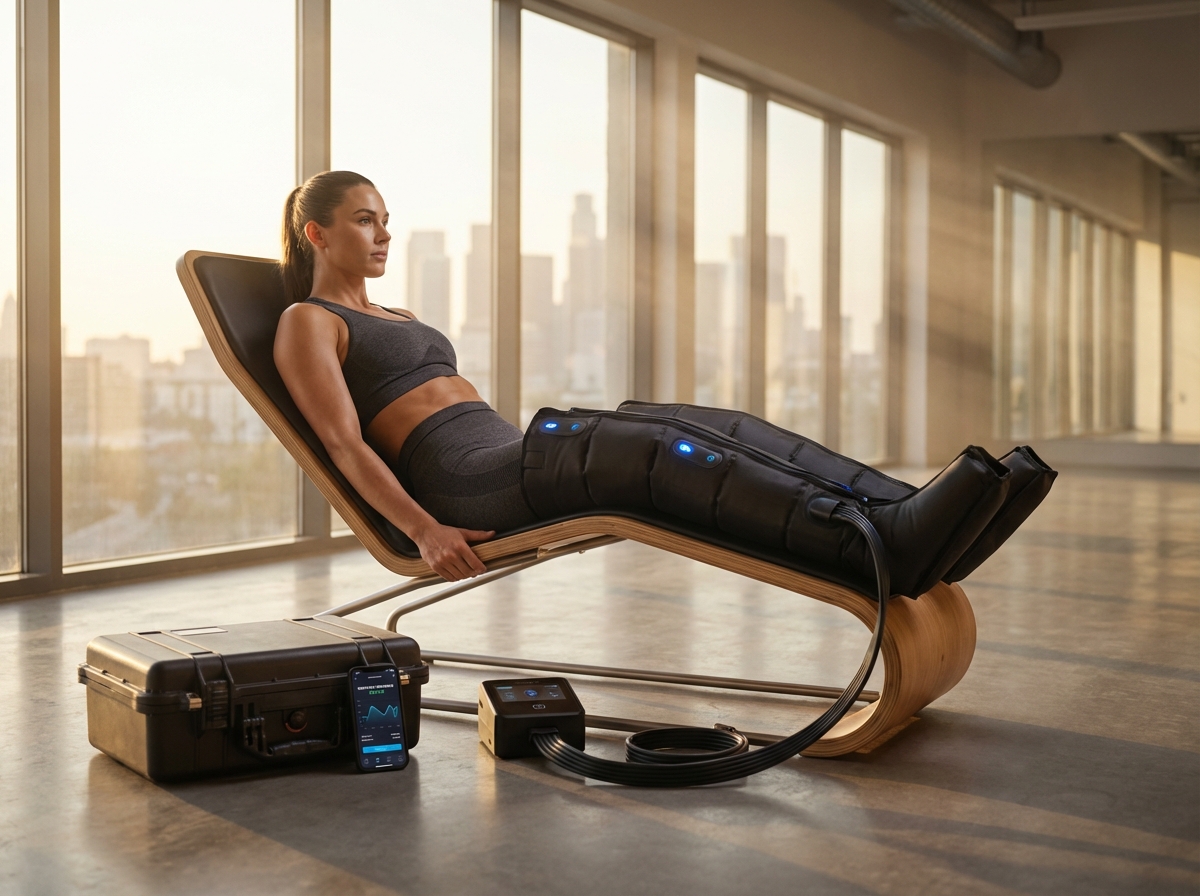
Dynamic compression boots are now a staple in athlete recovery, offering pneumatic, sequential pressure to speed clearance of metabolites and reduce soreness. This article explores how these systems work, evidence-based benefits, safety and programming, and the best models across budgets in the U.S. market for 2025 so athletes and coaches can choose the right system and protocol.
Why dynamic compression matters for athletic recovery
Recovery is not just about sitting still after a hard workout; it is an active biological process that requires the movement of fluids. When athletes push their limits, they create metabolic waste and microscopic damage in their muscle tissues. Dynamic compression boots provide a mechanical way to assist the body in clearing this waste through intermittent pneumatic compression—a technology that uses air to apply pressure to the limbs in a controlled manner.
The physiological rationale for using these systems is grounded in how our circulatory and lymphatic systems function. The heart is a powerful pump for sending blood to the extremities, but returning that blood from the feet back to the heart is a challenge as gravity works against the veins. While muscles usually help by contracting and squeezing the veins, they are often fatigued after intense exercise. Sequential peristaltic compression mimics this natural muscle pump. The boots inflate in a wave-like pattern, starting at the ankles and moving toward the hips. This specific motion increases venous return by twenty to thirty percent, ensuring that deoxygenated blood moves out of the legs more efficiently.
The lymphatic system benefits even more from this external pressure. Unlike blood vessels, the lymphatic system lacks a central pump and relies entirely on movement and pressure to transport lymph fluid, which carries white blood cells and waste products away from tissues. When an athlete uses dynamic compression, they are manually moving this fluid. Research published in 2022 showed that sequential compression can increase lymphatic flow by three hundred percent compared to rest, significantly reducing the swelling that often follows high-impact training or long-distance running.
Inflammation is another key target. While some inflammation is necessary for muscle growth, excessive swelling causes pain and limits mobility. Metabolic clearance is the process of removing byproducts like lactate and inflammatory markers. A study from 2023 focused on marathon runners found that those who used compression boots had eighteen percent lower levels of IL-6, a primary marker for systemic inflammation. By clearing these markers faster, the body can transition from a state of damage to a state of repair more quickly.
By late 2025, the body of peer-reviewed evidence has grown significantly. A major meta-analysis from 2024 looked at short-term recovery metrics across various sports, confirming that readiness to train improved by twelve percent the day after a session, measured through vertical jump power and sprint speed. Another study from early 2025 focused on delayed onset muscle soreness (DOMS), finding that a thirty-minute session at moderate pressure reduced subjective soreness by twenty-four percent at the forty-eight-hour mark.
Athletes notice several practical outcomes when they use these systems consistently. The most immediate feeling is relief from the “heavy leg” sensation common after heavy lifting or long endurance efforts. Many users also report better sleep quality, likely due to the relaxing effect the rhythmic pressure has on the nervous system, shifting the body from a sympathetic state to a parasympathetic (rest and digest) state.
It is important to set the right expectations. The effects on recovery are robust regarding soreness and swelling; if you are looking to feel less pain after a leg day, the boots are highly effective. They are also excellent for managing swelling from frequent travel. However, the impact on direct performance metrics is more modest. You should not expect a massive increase in top speed or one-rep max solely from using boots. The gains in power and speed are usually between two and five percent—small margins that are vital for professionals, while recreational athletes benefit primarily from the ability to return to training sooner.
The effectiveness of the treatment depends on programming. Using the boots for twenty to sixty minutes is the standard recommendation. The pressure should be firm but never painful. Most consumer systems offer a range of thirty to two hundred and fifty mmHg. For most recovery needs, staying between one hundred and one hundred and fifty mmHg is sufficient. High-pressure settings are not always better; the goal is to assist the body, not to crush the tissue.
| Metric | Typical Improvement | Evidence Level |
|---|---|---|
| Soreness Reduction (DOMS) | 24% to 50% | High |
| Lymphatic Flow Increase | Up to 300% | High |
| Venous Return Boost | 20% to 30% | Moderate |
| Inflammation Markers (IL-6) | 18% Reduction | Moderate |
| Next-Day Power Output | 2% to 5% | Low |
Using these boots has become a standard part of the modern athlete’s toolkit, bridging the gap between professional medical therapy and home recovery. Devices like the Hyperice Normatec Elite have shown in field tests that they significantly reduce joint swelling, making them useful for maintaining overall limb health as part of a broader recovery plan.
How compression boots work and key technical features
Understanding the mechanics of a compression system is the first step toward using it effectively. These devices are sophisticated pneumatic tools designed to manipulate fluid dynamics in the limbs. The core of the system is the chamber design. Most modern boots divide the leg into four to seven distinct zones—airtight pockets that inflate independently. A higher number of zones usually allows for a more precise application of pressure. For example, the Hyperice Normatec Elite utilizes seven zones to ensure the compression follows the natural contours of the leg without leaving gaps.
The way these chambers fill determines the type of therapy received. **Sequential compression** is the most common method: the chamber at the foot inflates first, and the next chamber up the leg inflates while the first stays full. This continues until the entire leg is compressed, creating a one-way street for blood and lymph fluid that prevents backflow and forces metabolic waste toward the torso. **Gradient compression** works slightly differently, applying the highest pressure at the ankle and decreasing pressure in each subsequent chamber up the thigh. This mimics the natural pressure drop found in medical-grade compression stockings but with much higher intensity.
**Peristaltic compression**, often called pulse technology, is a more advanced programming style found in premium units. Instead of holding pressure in every chamber, it uses a wave-like motion, inflating one zone and moving to the next while releasing the previous one. This mimics the natural muscle pump of the calves and is often reported to feel more like a manual massage than a static squeeze. Many athletes prefer this for long sessions as it feels less restrictive.
The technical metric for measuring this force is mmHg (millimeters of mercury). In the world of recovery boots, 1 mmHg is equivalent to about 1.36 cmH2O. Consumer systems in 2025 typically offer a range from 30 mmHg to 150 mmHg, though some high-pressure models now reach 250 mmHg. While higher pressure sounds superior, most recovery benefits occur between 50 and 120 mmHg. Using excessive pressure can actually collapse superficial lymphatic vessels and hinder the recovery process.
Technical Specifications of Leading 2025 Models
| Model Name | Max Pressure (mmHg) | Number of Zones | Battery Life | Connectivity |
|---|---|---|---|---|
| Hyperice Normatec Elite | 110 mmHg | 7 Zones | 3 Hours | Bluetooth App |
| Therabody Prime Ultra | 100 mmHg | 6 Zones | 4 Hours | Bluetooth App |
| Fit King FT-115A | 200 mmHg | 5 Zones | 4 Hours | Remote Control |
| Pulsio Elite | 200 mmHg | 6 Zones | 3 Hours | Integrated |
| Nike x Hyperice Hyperboot | 210 mmHg | 3 Zones | 2 Hours | On-device |
The hardware configuration has shifted significantly in 2025 toward single-chamber inflators. In older models, a large external pump box sat on the floor, connecting to the boots via a thick bundle of hoses. Modern “Elite” or “Ultra” models often build the pump directly into the boot itself, eliminating hoses entirely. These integrated systems rely on high-capacity lithium-ion batteries, providing three to four hours of use on a single charge, making them much easier to use in transit or locker rooms.
App connectivity has become standard for high-end systems, allowing users to customize the timing of each chamber. Features like ZoneBoost allow for extra time or pressure on specific areas, such as a sore calf. Apps also handle firmware updates, which is vital as manufacturers release new compression patterns based on the latest sports science.
It is helpful to distinguish these systems from other recovery tools. Static compression garments (socks/tights) provide a constant squeeze usually topping out at 30 mmHg; they lack the active pumping action of boots. Manual massage targets deep tissue and adhesions, but a therapist cannot apply perfectly uniform pressure to both legs simultaneously for an hour. Electrical muscle stimulation (EMS) uses currents to contract muscles, focusing on muscle fibers, whereas dynamic compression focuses on the vascular and lymphatic systems using external air pressure.
The Theragun Therabody Prime Ultra uses TruGrade technology to ensure pressure is distributed safely even if the boot is not a perfect fit, preventing the “tourniquet effect.” Budget systems like the ReAthlete Air-C often use fewer chambers (e.g., three zones) and simpler pumps, meaning the “wave” of pressure is less refined. They also usually require an AC outlet. Choosing between these features depends on usage frequency and portability needs.
Choosing the right system for your needs and budget
Choosing a compression system in late 2025 requires a clear understanding of recovery goals. The market has expanded to include everything from basic sleeves to medical-grade systems with integrated sensors. Start by evaluating usage frequency; daily use by a professional demands different durability than occasional weekend use.
Budget Tiers and Value
Price is the primary filter. Premium systems ($800–$1,300) offer advanced features like integrated pumps and high zone counts; the Hyperice Normatec Elite is a prime example. Midrange systems ($250–$600) provide a balance of power and portability, such as the Theragun Therabody Prime Ultra. Budget options (under $200) are functional but often lack sophisticated pressure sensors and use materials that may wear out faster.
Portability and Weight
Integrated systems have compressors built directly into the leg sleeves, eliminating external hoses and making packing easier. Some weigh less than 3 pounds per boot. Traditional systems with separate control boxes are often more powerful but heavier. Check for TSA approval if traveling for competitions; most modern battery-powered units meet these requirements.
Battery Life and Charging
A reliable battery is essential for mobile recovery. High-quality 2025 systems offer 3 to 4 hours per charge. Look for USB-C charging compatibility to minimize cable clutter. Some budget models still require proprietary wall adapters. User-replaceable batteries are a significant plus, extending the system’s lifespan by several years.
Maximum Pressure and Program Variety
Most users find 100 to 120 mmHg effective, though some advanced users prefer up to 250 mmHg. Look for systems with multiple pre-programmed modes (e.g., lymphatic drainage vs. pulsing massage) and the ability to isolate specific zones to target soreness without pressuring sensitive areas like knees.
Sleeve Fit and Materials
Premium boots typically have 5 to 7 chambers for a smooth compression wave; fewer chambers can create pressure gaps. Material should be medical-grade nylon for durability and easy cleaning. Overlapping chambers are superior to separate ones as they ensure continuous fluid movement. Always measure inseam and thigh circumference before buying, as poor fit reduces effectiveness.
Durability and Warranty
Check zipper and seam quality, as these are common failure points. A two-year warranty is standard for reputable brands in 2025. Research the availability of replacement parts; buying a single replacement sleeve is more economical than replacing a whole system. Brands with US service centers offer faster repair turnaround.
Clinical Certifications and App Support
FDA clearance indicates accurate pressure levels and safety. Smart features via Bluetooth apps allow for downloading new routines and tracking recovery data, which is useful for correlating soreness with training load. Firmware updates can also improve battery life or add features post-purchase.
Guidance for Specific User Groups
* **Elite Athletes:** Prioritize high zone counts, fast cycle times, and durability for daily multi-session use.
* **Team Staff:** Look for ease of sanitization between players.
* **Physical Therapists:** Require medical-grade accuracy and fine-tuned pressure control.
* **Recreational Athletes:** Midrange systems usually suffice, focusing on comfort and ease of use.
* **Travel Athletes:** Prioritize weight and battery life.
Trade-offs Between Price and Features
Budget boots are often louder, inflate more slowly, and lack app control. Premium models offer quieter motors, refined sensors that adjust pressure to limb size, and a more consistent treatment experience. You are paying for engineering that maximizes efficiency and comfort.
| Criteria | Budget Tier | Midrange Tier | Premium Tier |
|---|---|---|---|
| Typical Price | $100 to $250 | $250 to $600 | $800 to $1,300 |
| Number of Zones | 3 to 4 | 4 to 5 | 5 to 7 |
| Pump Style | External with Hoses | External or Integrated | Mostly Integrated |
| App Connectivity | Rarely Included | Commonly Included | Always Included |
| Warranty Length | 1 Year | 1 to 2 Years | 2 Years or More |
Final Considerations for Buyers
Consider the use environment: quiet motors are better for TV watching, while battery life is key for track meets. Check if the brand is eligible for HSA or FSA reimbursement to save money. Reliable customer support is worth the extra cost for daily users.
Top picks for 2025 across premium midrange and budget categories
The market for recovery technology has shifted significantly by late 2025, moving away from bulky external pumps toward integrated systems. Options fall into three distinct categories based on internal tech and build quality.
Premium Tier Systems
The premium category represents the peak of recovery technology, focusing on seamless integration and high zone counts to mimic professional manual massage.
Hyperice Normatec Elite
The gold standard for integrated design, eliminating external hoses by placing control units directly on the thigh. It features seven overlapping zones for smooth pressure transition and uses a patented pulse pattern. Fully compatible with the Hyperice app, it typically costs around $999. Ideal for professional athletes needing fast, cable-free setup. A limitation is the slightly higher weight of the boots due to built-in motors.
Therabody JetBoots Pro Plus
A high-end wireless system emphasizing fast cycle times and TruGrade technology for consistent pressure. The Pro Plus includes advanced programming to target specific muscle groups with intensity. Built with medical-grade materials, it ranges from $1,000 to $1,200. Best for elite endurance athletes requiring precise control. Battery life can drain quickly at max pressure with Bluetooth active.
Nike x Hyperice Hyperboots
A unique wearable focusing on feet and calves, combining dynamic air compression (up to 210 mmHg) with thermal technology (up to 125°F). The walkable design allows movement during use. Priced at $749, it suits athletes with chronic foot fatigue or plantar issues, though it lacks full leg coverage.
- Normatec Elite 7 zones, wireless, $999
- JetBoots Pro Plus Medical grade, fast cycles, $1,000+
- Nike Hyperboots Heat integration, walkable, $749
Midrange Tier Systems
Midrange boots offer a balance of professional features—like high pressure and decent battery life—without the premium price tag.
Fit King FT-115A
A 2025 flagship providing a cordless experience with five large 360-degree air chambers and smart sensors to prevent over-inflation. Notably quiet, it ranges between $400 and $500. Ideal for marathon runners or triathletes wanting premium features at a lower cost. It lacks a dedicated smartphone app.
Therabody JetBoots Prime
The entry point for Therabody’s wireless ecosystem, offering a simplified interface with four pressure levels. It maintains high build quality but removes complex modes. Priced around $400, it suits beginners wanting a reliable brand. It has fewer compression zones than Elite versions.
Quinear QN-090A
Focuses on customization, allowing users to toggle individual chambers on/off to avoid injury areas. Includes a robust battery and carrying bag. At approximately $250, it suits budget-conscious athletes wanting a full leg experience, though it uses external hoses.
- Fit King FT-115A Smart sensors, cordless, $450
- JetBoots Prime Simple interface, wireless, $400
- Quinear QN-090A Zone control, high value, $250
Budget Tier Systems
Best for occasional use or those testing compression therapy. These usually rely on external pumps and fewer air chambers.
ReAthlete Air-C
A popular full-leg massager with sequential compression. Lightweight and portable, it provides enough pressure for general relief despite lacking high mmHg. Priced at $150, it suits casual gym-goers. Thinner materials may not withstand years of heavy daily use.
Pulsio Compression Boots
Known for high pressure at a low price, reaching 200 mmHg across eight modes. Using a wired pump, performance rivals some midrange units. Ranging from $200 to $300, it suits powerlifters preferring high pressure. The external controller and hoses are bulky.
Cincom Leg Massager
A lower-leg-only option stopping at the knee, often including heat. Priced around $120, it suits hikers or walkers not needing thigh coverage. Limitations include battery life and lack of upper leg compression.
- ReAthlete Air-C Full leg, very affordable, $150
- Pulsio High pressure, 8 modes, $250
- Cincom Calf focused, heat feature, $120
| Tier | Avg Price | Key Feature | Best For |
|---|---|---|---|
| Premium | $900+ | Wireless / 7 Zones | Elite Athletes |
| Midrange | $250 – $500 | Cordless / Smart Sensors | Daily Trainers |
| Budget | Under $250 | Basic Sequential | Casual Use |
Verify current retail prices as sales fluctuate. Most premium brands are FSA/HSA eligible. Frequent travelers should prioritize integrated wireless models like the Normatec Elite or Fit King FT-115A to avoid carrying cables.
How to use program and integrate compression boots into training
Owning a high-end compression system is only the first step; value comes from integrating sessions into weekly training. Programming depends on the specific training block, whether focusing on endurance, strength, or tapering.
Programming for Post-Training Recovery
For best results, use boots within two hours of finishing a workout when the lymphatic system is most active in processing metabolic waste.
Endurance Training Protocols
After long runs or cycling, the primary goal is venous return. Use a sequential mode filling from feet to hip. Set pressure between 80 and 100 mmHg for 30 to 45 minutes. This allows several full compression cycles to move fluid pooling in lower extremities.
Strength and Power Sessions
Lifting heavy weights creates localized muscle swelling and micro-trauma. A shorter, more intense session works best: 20 to 30 minutes at 110 to 130 mmHg. Use features like “ZoneBoost” on specific groups (e.g., quads) to manage the inflammatory response leading to DOMS.
Specialized Protocols for Specific Goals
| Goal | Duration | Pressure Range | Frequency |
|---|---|---|---|
| Acute DOMS Reduction | 20-30 minutes | 100-120 mmHg | Twice daily |
| Travel Swelling | 20 minutes | 70-90 mmHg | Pre and post flight |
| Post-Competition | 60 minutes | 90-110 mmHg | Once, same day |
| Injury Rehab Adjunct | 20 minutes | 50-80 mmHg | Daily |
Travel and Competition
Travel causes “heavy legs” due to prolonged sitting. A 20-minute moderate session before and after travel prevents swelling. During competition weeks, use daily at lower pressure to keep legs fresh without deep tissue fatigue.
Sleep and Overnight Use
If using compression during sleep, pressure must be very low (40–60 mmHg)—a gentle hug, not a massage. Ensure the device has an automatic shut-off. Experts suggest no more than 60 to 90 minutes of active compression before the system turns off.
Integrating with Other Recovery Methods
Combining with Active Recovery
Do not go straight from workout to boots. Spend 10 minutes on a light cool-down walk to move blood naturally, then let the boots finish the job.
The Ice and Compression Mix
Using ice immediately after a session can limit blood flow needed for repair. Instead, alternate: use boots for 20 minutes to move fluid, then apply ice to joints if needed. Some use a “sandwich” method: 10 minutes compression, 10 minutes ice, 10 minutes compression.
Individualization and Medical Caveats
Tolerance varies; a lighter athlete needs less pressure than a heavier one. Start at the lowest effective setting. You should never feel sharp pain or numbness. If toes tingle or turn cold, pressure is too high or boots are too tight. Stop immediately. While compression boots offer many benefits, they require a healthy vascular system. Consult a doctor if you have a history of blood clots or heart issues.
Maintenance safety and medical considerations
Maintenance and hygiene for longevity
Keeping a system in top shape ensures performance. Sweat and moisture can damage fabric and internal sensors. Wipe down sleeve interiors after every use with a soft cloth and mild, alcohol-free disinfectant (alcohol dries out synthetic materials, cracking air bladders). Leave zippers open to air out before packing. Even premium systems like the Therabody Prime Ultra need care to prevent bacteria. Never submerge sleeves or machine wash them, as this destroys wiring and air chambers.
Battery care and storage habits
Most pumps use lithium-ion batteries lasting 3–4 hours. Avoid draining to zero; charge after every few sessions. Store boots without folding sleeves at sharp angles to prevent bladder leaks. Keep in a cool, dry place. Use a dedicated carrying case for travel to protect the control unit, as seen with the Fit King FT-115A.
Expected lifespan and warranty issues
Control pumps usually last 3–5 years; sleeves, handling constant expansion, may need replacement every 18–24 months with daily use. Common issues include broken zippers or air leaks. Most premium brands offer a 1–2 year warranty. Keep receipts for claims. The Hyperice Normatec Elite is noted for solid support and parts availability.
| Component | Expected Lifespan | Common Maintenance Issue |
|---|---|---|
| Control Pump Unit | 3 to 5 years | Battery capacity loss or motor noise |
| Compression Sleeves | 1 to 2 years | Zipper snags or internal bladder leaks |
| Air Hoses and Plugs | 2 to 3 years | O-ring degradation or cracked plastic |
Medical safety and contraindications
Medical safety is paramount. Do not use compression boots if you have Deep Vein Thrombosis (DVT), as pressure could move a clot to the lungs. Severe peripheral arterial disease is a contraindication, as external force can cut off restricted circulation. Uncontrolled heart failure patients should avoid the sudden fluid return to the heart. Avoid use over active skin infections or open wounds. Regarding surgery, most surgeons recommend waiting two to four weeks until incisions are fully healed before using dynamic compression; always consult your surgeon first. Pregnancy requires professional guidance due to blood volume changes.
Signals of improper use
A strong squeeze is normal; sharp pain, pins and needles, or numbness is not. Stop immediately if these occur. Bruising or redness indicates intensity is too high. Beginners should approach high-pressure budget systems like the ReAthlete Air-C with caution, starting at the lowest setting.
When to seek medical input
Seek advice if swelling persists after a session, or if you experience cold feet or skin color changes. Document sessions (date, mmHg, duration, subjective feeling) to help medical teams monitor response, especially during injury rehab.
Conclusions and recommendations
Choosing the right compression system in 2025 depends on usage plans and recovery goals. The market now spans from foot-specific warmers to full-body systems, offering a reliable way to manage soreness without daily professional massage. Technology is more accessible, with entry-level prices dropping and premium units becoming fully wireless.
Who benefits the most from these systems
Endurance athletes (runners, cyclists) remain primary users, using boots to move fluid and reduce “heavy legs.” Power athletes use them to manage inflammation after lifting. Individuals standing or sitting all day also benefit; 20 minutes in a boot can restore comfort by improving lower body circulation.
How to choose based on your budget
* **Premium ($800+):** For the best technology and portability. The Therabody Prime Ultra and Hyperice Normatec Elite offer high build quality, precise control, and hose-free designs ideal for travel.
* **Mid-Range ($200–$600):** The sweet spot for serious recreational athletes. The Fit King FT-115A offers cordless professional features, while Pulsio boots provide high pressure (up to 200 mmHg) and multiple modes.
* **Budget (Under $200):** Effective for basic recovery. The ReAthlete Air-C is a solid full-leg option, while Cincom boots serve those needing only lower-leg relief.
| Category | Model Recommendation | Estimated Price | Key Feature |
|---|---|---|---|
| Best Overall | Hyperice Normatec Elite | $999 | Wireless design |
| Best Value | Pulsio Compression Boots | $250 | 8 pressure modes |
| Best Budget | ReAthlete Air-C | $150 | Full leg coverage |
| Best for Feet | Nike x Hyperice Hyperboot | $749 | Heat and compression |
Key safety and programming rules
Sessions should typically last 20–30 minutes (up to 60 for intense recovery) at pressures between 50 and 150 mmHg. Never endure sharp pain or numbness. Consistency beats intensity; using boots 3–5 times a week at moderate pressure is superior to infrequent high-pressure sessions. Ensure proper fit by checking calf measurements against manufacturer charts.
Practical advice for your decision
- Choose wireless for travel or gym use to avoid cumbersome hoses.
- Prioritize zone count (5–7 zones) for better targeting of sore spots.
- Check for FSA/HSA eligibility to offset costs.
As technology evolves with better apps and quieter motors, always verify latest prices and consult a medical professional before starting, especially if you have vascular or heart conditions.
Sources
- Top 7 Best Compression Boots in 2025 – Cybernews — The Theragun Therabody Prime Ultra retains the top spot on my list of pressure boots. Using TruGrade technology, you can choose the size that fits you the best.
- 6 Best Compression Boots For Muscle Recovery, According To Editors — Best Overall: Hyperice Normatec Elite · Best Beginner: Therabody JetBoots Prime · Best Premium: Therabody JetBoots Pro Plus · Best For Feet: Nike x …
- Normatec Elite Compression Boots Review | GearJunkie Tested — In short: The Hyperice Normatec Elite compression boots proved beneficial for speeding recovery and reducing muscle pain and joint swelling. …
- Fit King FT-115A Review & Test (Cordless, Premium & Portable) — 2025's Best Compression Boots! – Fit King FT-115A Review & Test (Cordless, Premium & Portable) · Comments.
- 6 Best Compression Boots for Muscle Recovery 2025, Tested by … — While several brands offer compression boots for workout recovery, it's clear to us that Hyperice and Therabody reign supreme.
- Best Compression Boots (2025) – BarBend — Best Compression Boots Overall: Hyperice Normatec Elite; Best Budget Compression Boots: ReAthlete Air-C Full Leg Compression Massager …
- Best Compression Boots: We Review 8 Brands — BEST VALUE COMPRESSION BOOTS The Pulsio compression boots stand out for their impressive 8 different pressure modes up to 200mmHg, …
- Compression Boots: The Benefits, How to Use Them, & Best Products — The truth about compression boots and whether they really boost recovery. Learn what experts and the science says about these pricey recovery tools.
Legal Disclaimers & Brand Notices
The information provided in this article is for informational and educational purposes only and does not constitute medical advice, diagnosis, or treatment. Although dynamic compression systems are widely used in athletic recovery, they involve physiological processes such as increased venous return and lymphatic flow. Always seek the advice of your physician or other qualified health provider with any questions you may have regarding a medical condition, especially if you have a history of vascular issues, heart conditions, or are recovering from surgery. Never disregard professional medical advice or delay in seeking it because of something you have read in this content.
All product names, logos, brands, and registered trademarks mentioned in this article are the property of their respective owners. These include, but are not limited to:
- Hyperice and Normatec
- Therabody and Theragun
- Nike
- Fit King, Pulsio, ReAthlete, and Quinear
The use of these names, logos, and brands is for identification purposes only and does not imply affiliation, endorsement, or certification by the trademark owners.