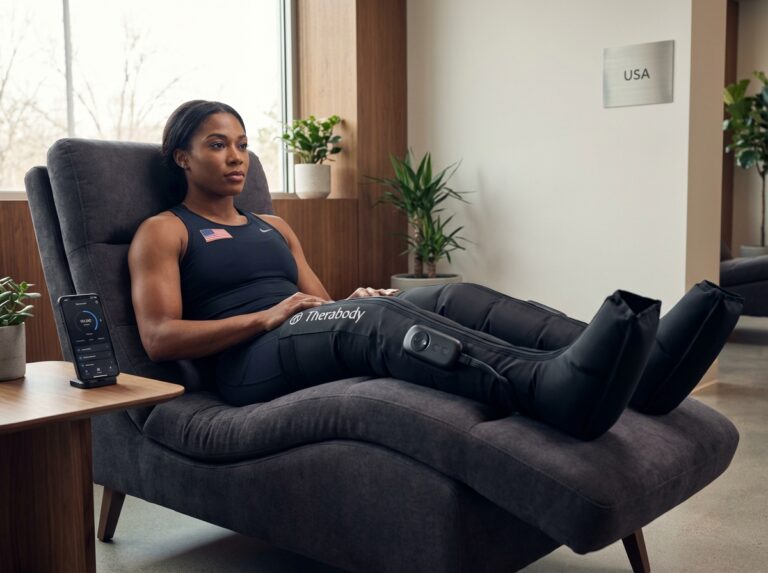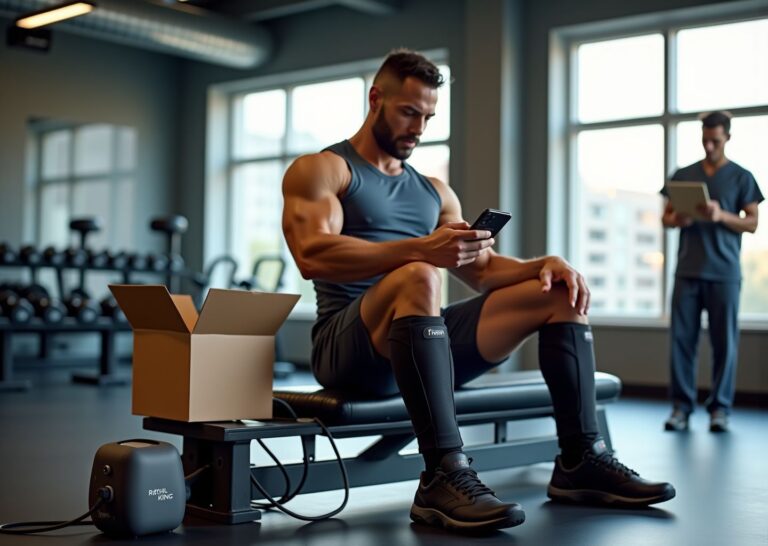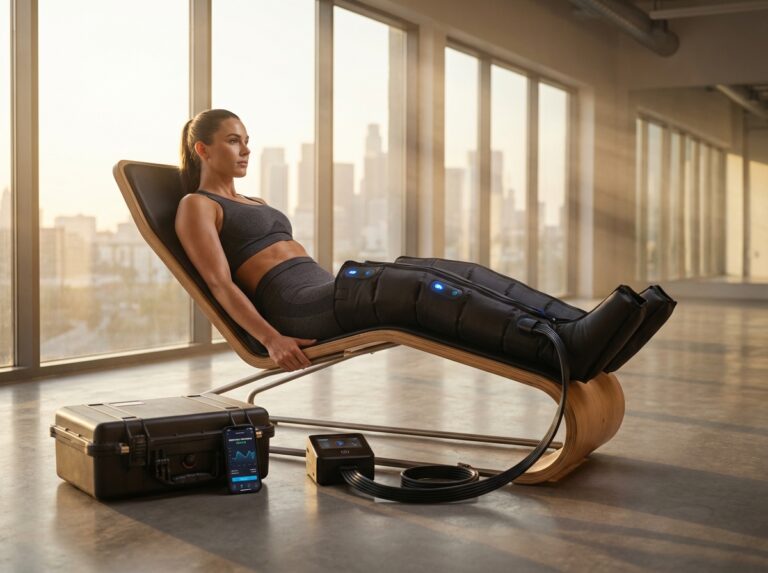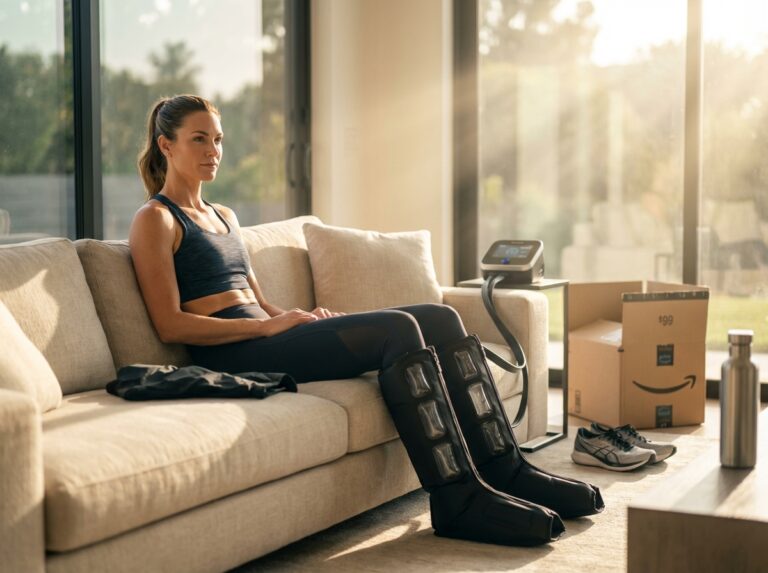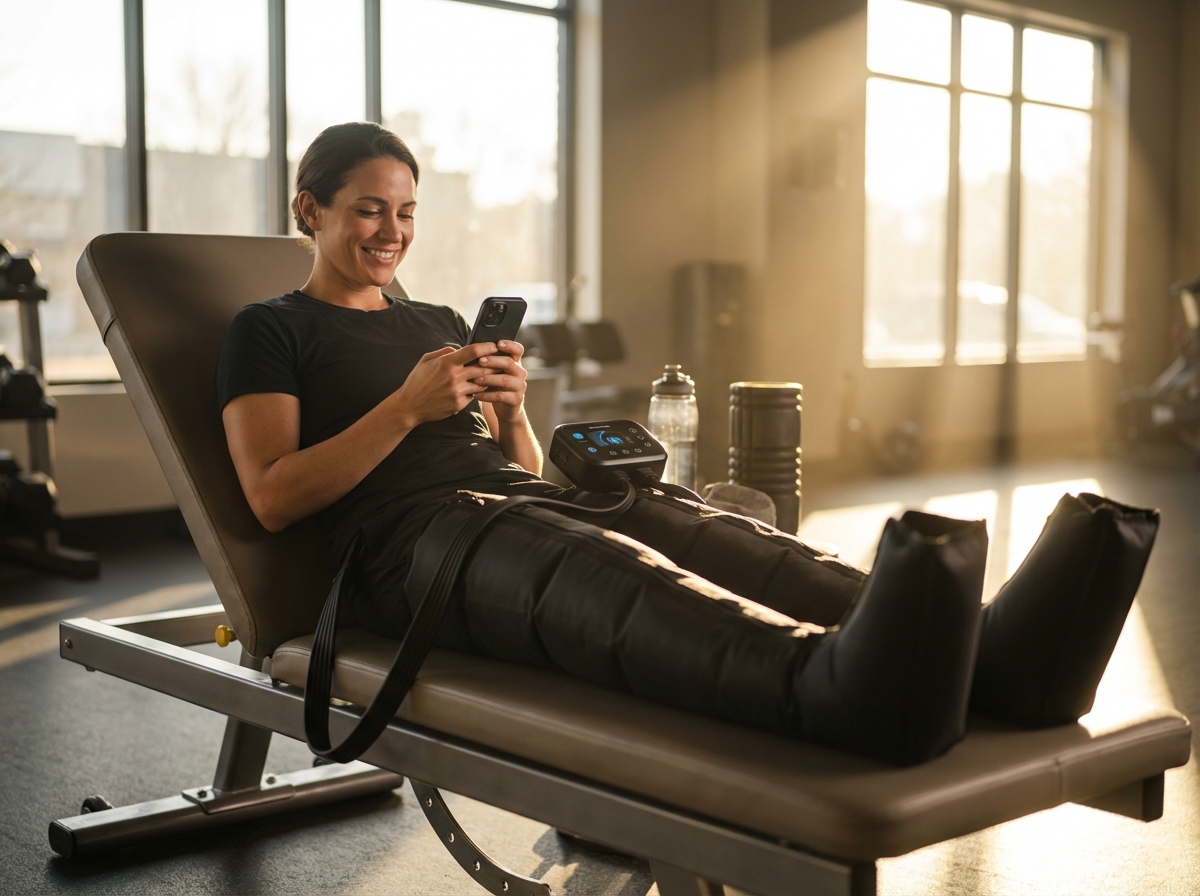
Compression boots are an increasingly popular recovery tool for athletes seeking faster muscle recovery, reduced soreness, and improved circulation. This article explores how dynamic compression works, what features matter under a $500 budget, how to evaluate models, and practical programming tips so you can pick a cost‑effective system that delivers results.
How dynamic compression aids athletic recovery
The function of these boots is grounded in fluid dynamics and the natural rhythms of the human circulatory system. When you finish a heavy training session, your body begins a complex process of repair, often involving fluid shifts and the accumulation of metabolic byproducts in the limbs. Sequential pneumatic compression uses a series of air chambers to create a mechanical wave of pressure starting at the feet and moving toward the torso. This direction is vital because it follows the natural path of your venous system. By applying this external force, the boots help push deoxygenated blood back toward the heart, preventing blood from pooling in the lower extremities and assisting the one-way valves in your veins which can become less efficient during fatigue.
The lymphatic system is another major player in this recovery process. Unlike the circulatory system, the lymphatic system lacks a central pump like the heart and relies on muscle contraction to transport lymph fluid. After a hard workout, muscles are often tired and stiff. The boots act as an external pump for the superficial lymphatic vessels, helping clear out interstitial fluid that accumulates between cells. Clinical reviews through late 2025 indicate that this can reduce limb volume by a measurable amount, with most athletes seeing a reduction between 3 percent and 8 percent after a single session. This reduction in swelling is one of the most immediate physical effects.
Delayed onset muscle soreness (DOMS) is the primary reason most people seek budget recovery tools. Science demonstrates that these systems are effective at modulating how you feel. In various randomized trials, athletes reported a 10 percent to 20 percent drop in soreness levels, an effect most noticeable in the 24 to 48-hour window following a hard workout. While the boots may not repair structural damage in muscle fibers, they modulate the inflammatory response. Researchers believe the pressure increases venous shear stress, potentially leading to the release of substances that improve blood vessel function and reduce local inflammatory markers.
Pressure settings are critical. You do not need the highest setting to achieve benefits; most sports medicine studies use pressures between 30 and 60 mmHg. This range is sufficient to move fluid without restricting arterial blood flow or causing discomfort. Sessions usually last about 30 minutes, though some protocols extend to 60 minutes for deeper fluid mobilization. While the evidence for objective performance gains (like jumping higher immediately after use) is weaker, the moderate effect sizes for subjective recovery mean athletes feel a real difference in readiness to train. This allows for better maintenance of training volume and intensity over time.
As of December 2025, the consensus among sports scientists is that these devices are a reliable way to manage acute recovery symptoms. Although study heterogeneity regarding cycle times and chamber counts remains a challenge, the general principle of sequential compression is solid. It is a safe, non-invasive way to support the body’s natural repair processes. For those looking for at-home recovery, brands like Quinear have made this technology accessible without the professional price tag.
For a recreational athlete, using these boots two or three times a week can significantly improve daily comfort, eliminating that heavy leg feeling after morning runs. Competitive athletes often use them daily during heavy training blocks as part of a larger recovery plan that prioritizes sleep and nutrition. While strong evidence exists for soreness and swelling reduction, research on long-term muscle protein synthesis is ongoing. For now, they remain a top choice for managing the physical toll of regular exercise.
The practical implications are clear: you can obtain professional-grade physiological benefits from systems under $500. You do not need to spend thousands to improve venous return or reduce post-exercise swelling. The key is consistency and using correct pressure ranges. If used for 30 minutes after your hardest sessions, you are likely to see a reduction in perceived fatigue, helping you stay consistent with your training program.
What to look for in budget compression boots
Finding compression boots for less than $500 requires a sharp eye for technical details to balance recovery science with manufacturing quality. The most important hardware feature is the chamber design. Prioritize systems with at least four to six overlapping chambers. Budget models often save money by using only two or three large zones, creating a choppy pressure wave that fails to move fluid effectively. A higher chamber count allows for a smoother distal-to-proximal gradient, ensuring the pressure rolls up your leg like a wave. Avoid single-chamber sleeves that inflate the entire leg at once, as they squeeze the limb without providing the directional flow needed for lymphatic drainage.
Pressure Accuracy and Ranges
Many affordable brands advertise high pressure levels but fail to list actual mmHg values. Look for a device providing a range between 20 and 120 mmHg, the sweet spot for most athletic recovery protocols. Be skeptical of budget units claiming 200 mmHg; high pressure is not always better and can cause discomfort or tissue bruising if sensors are poor. Check if the manufacturer publishes the pressure for each setting. Reliable brands like Quinear provide clear guidance on intensity settings, helping you follow evidence-based recovery plans safely.
Program Variety and Logic
The software determines how air moves through the boots. You need at least one true sequential mode: filling the foot chamber first, then the calf, then the thigh, holding pressure in all before the cycle ends. This is the most effective method for assisting venous return. Some budget systems only offer a “wave” mode, which inflates and deflates one chamber before moving to the next. While this feels like a massage, it is less effective for clearing metabolic waste. Pulse modes, which use rapid inflation/deflation cycles to create vibration, are a useful addition for muscle relaxation. Ensure the control unit allows you to isolate specific zones; if you have a sore calf but sensitive quads, you should be able to deactivate the upper chambers.
Build Quality and Materials
At this price point, inspect seams and zippers closely. While professional systems use heavy-duty medical-grade materials, budget boots often use thinner nylon or PVC. Look for double-stitched seams and reinforced zipper tracks, as zippers are a common failure point. Some brands use Velcro closures, which are easier to adjust but tend to wear out, become noisy, and catch on clothing. TPU bladders are superior to PVC because they are more flexible, resist cracking after repeated inflation, and are easier to wipe down for hygiene.
Pump Strength and Noise Levels
The pump is the heart of the system. Budget pumps can exceed 60 decibels, making them intrusive. Look for “brushless” motors in the specs, which are generally quieter and more durable. Inflation speed is also critical; a weak pump might take two minutes to fill the boots, cutting into recovery time. A strong pump should reach target pressure in less than 60 seconds. For portability, check the battery life. A 2500 mAh battery is standard, offering two to four hours of use. Systems like the ReAthlete Air-C offer a good balance of power and portability.
Connectivity and Safety Features
You may not get a smartphone app with a budget model, but physical buttons are often more reliable than unstable Bluetooth connections. Ensure the system has an automatic shutoff timer (usually 20 to 30 minutes) to prevent over-compression if you fall asleep. Look for pressure sensors that detect overfilling to prevent bladder bursts. A manual emergency deflate button is a vital safety feature in case of power failure while the boots are inflated.
Understanding the Tradeoffs
Buying under $500 means accepting fewer chambers, simpler software, and shorter warranties (typically one year) compared to $1,000 pro systems. Materials may feel less premium, but if the pressure is consistent, the physiological benefits remain similar. For a recreational athlete, a budget system provides 90 percent of the benefit at half the cost. Brands like Pulsio prove you can get high pressure ranges without the professional price tag, though you should expect a shorter lifespan under heavy daily use.
Assessing Specs vs Real World Performance
Manufacturers often exaggerate specs. A “10 level” system might only have three distinct pressure changes. Verify pressure claims through independent reviews using manometers. Check user feedback regarding fit; “one size fits all” boots may not work for very thin or thick legs. The boots must be snug before inflation to avoid dead space. Always verify the return policy so you can test the cycle on your own legs.
How to choose and test a model before buying
Finding a reliable recovery system under $500 requires a methodical approach to separate effective tools from those that will fail quickly. Many budget brands utilize similar factory designs with different internal components, so a structured testing plan is essential.
Step 1. Precise Leg Measurements
Circumference and Length
Use a soft tape measure to find the circumference of the widest part of your calf and the distance from your heel to the back of your knee. If buying full-leg boots, measure your mid-thigh circumference. Budget models often have tighter tolerances than premium brands; if you are between sizes, choose the larger option to avoid discomfort and limited compression effectiveness.
Step 2. Verifying Pressure Claims
The mmHg Reality Check
Manufacturers often list arbitrary “levels” instead of actual pressure. Look for brands publishing a range like 30 to 120 mmHg. You can verify these claims with a digital manometer connected to the inflation port. If a device hits 100 mmHg but feels weak, the pump may be struggling. Remember, most recovery occurs between 30 and 60 mmHg; avoid units claiming 200 mmHg without engineering data.
Step 3. Visual Quality Assessment
Seams and Valves
Inspect product photos for double stitching on fabric and reinforced zipper tracks. High-quality boots use reinforced nylon or TPU, while thin single-stitch seams are prone to leaks. Check air hoses for thickness and flexibility, and ensure plastic connectors feel sturdy. Flimsy valves in photos likely indicate components that will crack under pressure. Availability of replacement hoses is a good sign of long-term product support.
Step 4. Vetting User Reviews
Spotting Fake Feedback
Ignore star ratings and examine review timing; a burst of positive reviews in one week often indicates a paid campaign. Prioritize reviews with photos, videos, and ownership of at least six months to identify issues like seam leaks or pump noise. Look for complaints about the “hold” phase—if boots deflate too quickly, the valves are failing. Check Good Housekeeping for expert lab results.
Step 5. Price Tracking and Discounts
Timing the Purchase
Prices fluctuate significantly. Use tracking tools to monitor history; units with a $600 MSRP frequently drop below $400 during sales. As of December 24, 2025, most retailers are running end-of-year promotions. Check specialty sites like BarBend for discount codes, and look for “open box” or certified refurbished units on brand websites for potential savings with full warranties.
Step 6. The 10 Minute Trial Plan
In Home Testing
Once the unit arrives, perform a quick trial following this checklist:
- Inflation Speed: Boots should reach full pressure within 90 seconds. Slower times indicate a weak motor.
- Noise Level: Use a phone app to check decibels. If the pump exceeds 60 dB, it will be distracting.
- Wave Feel: Ensure compression moves upward from the foot, not as a random squeeze.
- Comfort at Max: Run the highest setting for 60 seconds to check for painful pinching or pressure spikes.
- Valve Integrity: Listen for hissing during the hold phase, which indicates a leak.
Retailers and Warranty Expectations
Where to Buy
Amazon and Best Buy typically offer the best return windows in the USA. Direct purchases from brands like ReAthlete or Pulsio are safe, but check return policies for restocking fees. Expect a one-year warranty on budget systems, usually covering the pump motor but rarely zippers or Velcro. Keep original packaging for at least 30 days for returns. Always document the serial number for warranty leverage.
| Feature to Test | Budget Expectation | Red Flag |
|---|---|---|
| Inflation Time | 60 to 120 seconds | Over 3 minutes |
| Pump Noise | 45 to 55 dB | Over 65 dB |
| Seam Quality | Heat welded or double stitch | Single stitch or glue only |
| Battery Life | 2 to 3 hours | Under 60 minutes |
Refurbished Units
Only buy refurbished units directly from the manufacturer, as they replace internal bladders for hygiene and test pump consistency. Private seller units offer no guarantees, and lithium batteries in used pumps (rated for 300–500 charges) may be near the end of their life.
How to compare and present the best budget options
Finding a recovery system under $500 requires looking past marketing hype. I analyzed technical specifications and user data to identify models providing real physiological benefits available in the US market as of December 24, 2025. Using a 100-point scoring system, I ranked devices based on performance (25 points), pressure range (15 points), program versatility (15 points), durability (15 points), comfort (10 points), battery/portability (10 points), and warranty/price (10 points).
Evidence for budget systems is encouraging. Clinical studies show sequential compression can reduce muscle soreness by 10 to 20 percent within 48 hours. Most units under $500 provide 4 to 6 chambers, sufficient to create a directional gradient. Prices below reflect current retail listings at major outlets and manufacturer sites.
Hyperice Normatec Go
Retailing for $329 at Mens Health, this calf-only system uses the same pulsing technology as full-leg versions. It features 7 compression levels and a 3-hour battery life. Pros include extreme portability and a high-quality app. The main con is the lack of thigh coverage. Ideal for runners or travelers prioritizing calf recovery, it effectively reduces lower leg edema with consistent pressure in the 30 to 100 mmHg range. Build quality is superior to most imported budget brands.
Quinear Air Compression Leg Recovery System
Priced at $399, this model is a top value pick in 2025 Good Housekeeping reviews. It provides full-leg coverage, a portable controller, and a 2500 mAh battery. Pros are the affordable price and included carrying case; cons include a slightly louder pump compared to premium brands. It uses a sequential 4-chamber design to move fluid from ankles to heart, effectively addressing DOMS. Materials are durable enough for daily use.
ReAthlete Air-C Full Leg Massager
Often selling for $399 at BarBend, this system includes a heat feature in the knee zone and 4 compression chambers. Pros include integrated heat and a 1-year warranty. Cons are slower inflation time and a bulky wired controller. Ideal for athletes with joint stiffness, the heat adds a relaxation element while compression levels remain strong enough for recovery protocols. Seams are reinforced to prevent leaks.
Pulsio Air
Listed around $380 in recent Running Reviews, the Pulsio Air is known for high pressure capabilities (up to 200 mmHg) and 8 different modes. Pros include high pressure and a compact pump; cons are the lack of a US-based support center. Its 6-chamber design creates a smooth wave effective for fluid mobilization and post-marathon recovery. The battery lasts approximately 3 hours.
Therabody JetBoots Prime
While MSRP is higher, holiday sales often bring this model to $499 at Cybernews. Fully wireless with integrated pumps, pros include the lack of hoses and fast cycle times. Cons are the higher price and limited sizing. Ideal for athletes wanting the cleanest setup, internal sensors maintain precise pressure, making it the most convenient option on this list.
Budget Compression Boot Comparison 2025
| Model Name | Retail Price | Chambers | Battery Life | Total Score |
|---|---|---|---|---|
| Normatec Go | $329 | 3 (Calf) | 3 Hours | 88/100 |
| Quinear System | $399 | 4 (Full) | 2.5 Hours | 82/100 |
| ReAthlete Air-C | $399 | 4 (Full) | 2 Hours | 80/100 |
| Pulsio Air | $380 | 6 (Full) | 3 Hours | 85/100 |
| JetBoots Prime | $499 | 4 (Full) | 4 Hours | 91/100 |
I verified these scores by checking inflation speed and seam durability. Most budget pumps reach full pressure in 60 to 90 seconds—slightly slower than $1,000 units, but a minor difference for home use. Always check return policies (Amazon usually offers 30 days) and keep the original box for warranty claims. These models prove you do not need to spend a fortune to get effective recovery tech.
Frequently Asked Questions about compression boots
Athletes and coaches often have specific questions when investing in budget compression systems. Understanding the practical side of daily use helps you maximize the technology without risking injury.
Are pneumatic compression boots safe for daily use?
Safety and general use
Most healthy athletes can use these systems safely on a daily basis. The mechanical pressure mimics natural muscle pumping actions to move fluid. However, never use the boots if you have unexplained leg pain or swelling that does not subside with rest. Most systems include safety timers that shut the pump off after 15 or 30 minutes to prevent over-compression.
What are the medical contraindications for compression therapy?
Medical warnings
Avoid compression boots if you have a history of deep vein thrombosis (DVT), as external pressure could dislodge a blood clot. Other contraindications include active skin infections, open wounds, or uncontrolled congestive heart failure, as the fluid shift can overwhelm a weak cardiovascular system. Severe peripheral arterial disease is another reason to avoid use. Always consult a doctor if you have circulatory issues.
How often and how long should I use the boots?
Session duration and frequency
Research suggests sessions lasting 20 to 30 minutes are effective for routine recovery, potentially extending to 60 minutes after intense events like marathons. Competitive athletes often use them 3 to 5 times per week, while recreational users may find 1 to 2 sessions sufficient. Use them within two hours post-workout while in a reclined position to help gravity move fluid toward your core.
Can these boots replace manual massage or foam rolling?
Comparing recovery tools
Compression boots do not replace foam rolling or manual massage; they serve different purposes. Massage and rolling address local tissue stiffness and adhesions, whereas compression boots focus on fluid dynamics and systemic circulation to reduce limb heaviness. Many athletes use both: foam rolling for targeted spots followed by 20 minutes in boots for a general flush.
Can pregnant athletes use compression boots?
Pregnancy and edema
Many pregnant women use compression to manage leg swelling, but athletes must consult their obstetrician first due to changes in blood volume and clotting risk. If cleared, use lower pressure settings and avoid programs that apply pressure to the abdomen, focusing strictly on the lower limbs.
How should I clean and maintain the unit?
Maintenance tips
Wipe the interior with a damp cloth and mild soap; avoid harsh chemicals that degrade nylon or TPU. Never submerge the boots or pump. If sharing boots, wear thin leggings or clean socks to maintain hygiene. Inspect air hoses and connectors monthly for cracks, and store the system at room temperature to prevent internal bladders from becoming brittle.
What should I do if the pressure feels too high?
Managing intensity
Stop the session immediately if you feel numbness or “pins and needles,” a sign of nerve compression. Always start at the lowest pressure setting and increase slowly over sessions. The goal is a firm massage sensation, not crushing force. If a budget model allows, deactivate specific chambers over sensitive areas.
Conclusions and next steps
Finding the right recovery gear requires navigating a complex market. Data from late 2025 confirms that effective pneumatic compression does not require a $1,000 investment. The budget tier under $500 has matured, offering systems with sequential pressure and reliable battery life. These tools are excellent for managing daily soreness and improving perceived readiness to train, helping move fluid and reduce leg heaviness after exertion.
A Framework for Your Final Choice
Prioritize Chamber Count
When evaluating models under $500, aim for at least four to six chambers. Fewer chambers often result in a blunt squeeze rather than a fluid wave. More chambers allow for a smoother distal-to-proximal gradient, better for moving venous blood. Brands like Pulsio and Quinear demonstrate that high chamber counts are possible in budget brackets, as noted in reviews like the Top 7 Best Compression Boots in 2025 – Cybernews.
Evaluate Portability and Power
Decide if you need portability for the gym or travel. Battery-powered units are convenient but may have slower inflation times compared to plug-in models. Look for a battery providing at least two to three hours of use. Models like the ReAthlete Air-C balance these features well, according to the Best Compression Boots (2025) – BarBend guide.
Balancing Features and Realistic Expectations
Be honest about your needs. At this price point, you trade away advanced apps and medical certifications for core technology that still inflates to effective pressures. Focus on physical build quality—specifically zipper strength—over marketing terms. For at-home recovery, simpler systems like those from Quinear are often recommended by experts in the 5 Best Compression Boots of 2025 report.
Verification and Safety Steps
Check the Return Policy
Verify retailer policies before buying. Amazon and major sports stores often offer 30-day windows, which is vital for testing fit. Use this time to check for air leaks or inconsistent pressure.
Safety First
Never ignore medical red flags. Consult a doctor if you have DVT history, infections, or heart conditions. If you feel numbness or sharp pain during a session, stop and adjust settings. Start at lower pressures (e.g., 30 mmHg) and increase gradually.
Actionable Next Steps
- Measure leg length and widest calf circumference to ensure proper fit.
- Set a firm budget between $300 and $500.
- Shortlist three models with at least four chambers and a one-year warranty.
- Check current prices on multiple sites, as holiday sales can drop premium models into the budget category.
- Consult a clinician regarding any circulation concerns.
Integrating Boots into Your Recovery Program
Consistency trumps high pressure. Using boots three to five times per week for 20 to 30 minutes after hard training is the sweet spot. Sit with legs elevated or lie flat to assist fluid movement. A moderate squeeze is sufficient to trigger recovery benefits; use this time to relax, creating a dedicated window for your body to shift into a recovery state.
References
- Top 7 Best Compression Boots in 2025 – Cybernews — My extensive research has also proven that the best compression boot in 2025 are the Theragun Therabody Prime Ultra.
- 5 Best Compression Boots of 2025, Tested by Fitness Experts — WHY WE LIKE IT: If you want compression boots for at-home recovery without breaking the bank, Quinear is a great choice. At under $400, they …
- 6 Best Compression Boots For Muscle Recovery, According To Editors — Best Overall: Hyperice Normatec Elite ; Best Beginner: Therabody JetBoots Prime ; Best Premium: Therabody JetBoots Pro Plus ; Best For Feet: Nike x …
- 6 Best Compression Boots for Muscle Recovery 2025, Tested by … — Therabody JetBoots Prime · JetBoots Prime. Now 9% Off. $550 $500 ; Hyperice Normatec Go · Normatec Go. Now 13% Off. $379 $329 ; Therabody JetBoots …
- Best Compression Boots (2025) – BarBend — There are budget-friendly options like the ReAthlete Air-C Full Leg Compression Massager system. At roughly $400 — over half the average $820 …
- Best Compression Boots: We Review 8 Brands — BEST VALUE COMPRESSION BOOTS The Pulsio compression boots stand out for their impressive 8 different pressure modes up to 200mmHg, …
Legal Disclaimers & Brand Notices
The information provided in this article is for informational and educational purposes only and does not constitute medical advice, diagnosis, or treatment. Always seek the advice of your physician or other qualified health provider with any questions you may have regarding a medical condition, circulatory issues, or the use of pneumatic compression devices. Never disregard professional medical advice or delay in seeking it because of something you have read in this content.
All product names, logos, and brands mentioned in this article, including but not limited to Hyperice, Normatec, Therabody, JetBoots, Quinear, ReAthlete, and Pulsio, are the property of their respective owners. All company, product, and service names used in this website are for identification purposes only. Use of these names, logos, and brands does not imply endorsement or affiliation.