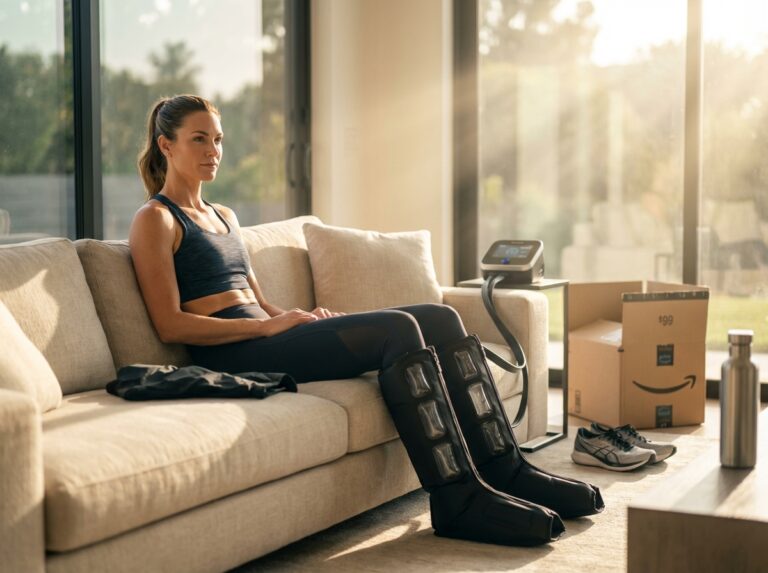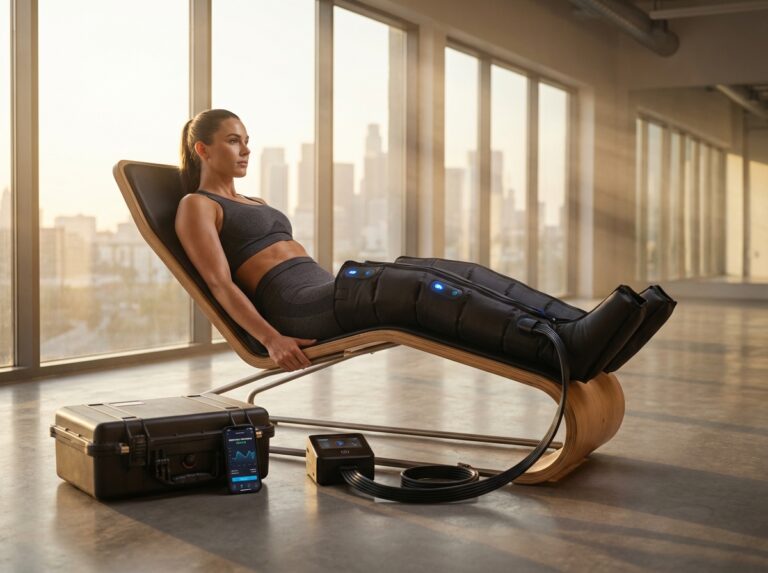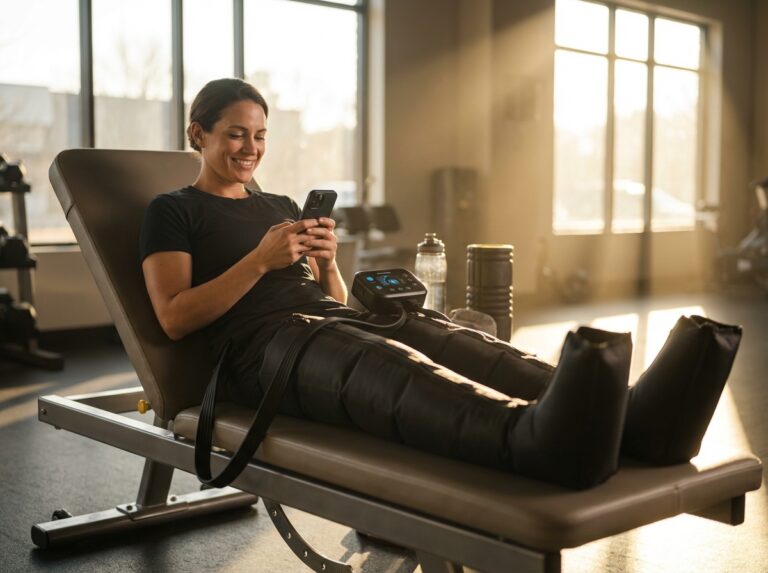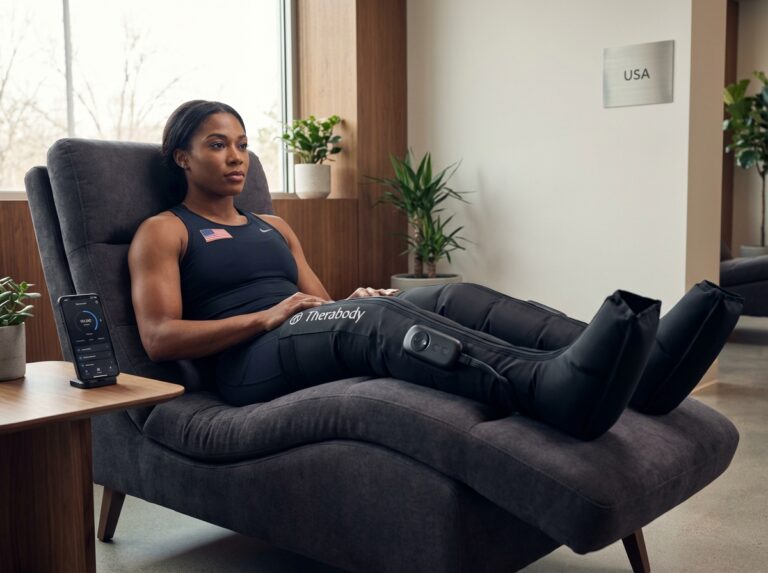
After six months of daily use of the Normatec 3 Legs, this review explores how dynamic compression boots perform in athletic recovery. We cover device design, software, real-world benefits, evidence from sports science, protocols for training cycles, costs and alternatives, and practical tips to get the most from compression systems. Ideal for athletes, coaches, and serious recovery seekers.
What the Normatec 3 Legs Is and How Dynamic Compression Works
The Normatec 3 Legs system is a medical-grade device that uses dynamic air compression for recovery. At its heart, it’s a form of sequential pneumatic compression (SPC), a technology that has been used in clinical settings for decades to manage circulatory conditions. The system consists of three main parts: a compact control unit, a pair of full-length leg attachments, and a hose that connects them. The control unit itself is surprisingly small and light, weighing 3.2 pounds and measuring about the size of a small shoebox, making it portable enough for travel. It houses a rechargeable lithium-ion battery that provides up to three hours of use on a single charge, and its power adapter is compatible with international voltages.
The leg attachments are made of durable nylon and feature five overlapping compression zones that run from your feet all the way up to your upper thigh. This overlapping design is crucial because it prevents gaps in the compression, ensuring a smooth and continuous pressure gradient up the leg. You control the entire session through the main unit, which has simple physical buttons for power, start/stop, and adjusting session parameters. For more granular control, the unit connects via Bluetooth to the Hyperice app. The app lets you customize session time, select one of seven pressure levels ranging from 30 to 110 mmHg, and activate the ZoneBoost feature, which provides extra time and pressure to a specific zone if you need it.
A typical session begins with zipping up the leg attachments and connecting the hose to the control unit. From there, you can either use the on-device controls to start a standard “Recovery Flush” session or open the app to select a preset or create a custom routine. Once started, the boots begin to inflate sequentially, starting at the feet (Zone 1) and moving progressively up the leg through the calves, knees, and thighs. This is the core of dynamic compression.
This method is fundamentally different from other recovery modalities. Static compression, like wearing compression socks or tights, applies constant, uniform pressure. It can help reduce swelling but doesn’t actively pump fluid. Cryotherapy aims to reduce inflammation through cold exposure. Active recovery, like a light walk or cycle, uses your own muscle contractions to promote blood flow. Dynamic compression with the Normatec 3 is unique because it uses external pneumatic pressure to mimic and enhance the body’s natural circulatory processes. The system employs a patented Pulse technology. Instead of just squeezing and holding, it pulses the pressure in each zone, which is designed to be more effective at moving fluid without occluding blood flow. After a zone has finished its pulse cycle, it holds the pressure to prevent backflow while the next zone up the leg activates. This creates a continuous, wave-like massage that effectively pushes fluid from your lower extremities back toward your core.
This modality is also distinct from manual massage or percussive therapy. Whereas tools like a massage gun offer targeted, deep-tissue manipulation to release specific knots and adhesions, dynamic compression provides a passive, systemic flushing of the entire limb. It uses broad pressure to enhance fluid movement, making it ideal for reducing general swelling and leg heaviness. The two are complementary: Normatec is for broad recovery, while percussion is for precise troubleshooting.
The physiological goal is to support several key biological processes. After intense exercise, metabolic byproducts can accumulate in the muscles, and micro-trauma can lead to inflammation and fluid buildup. The sequential compression from the Normatec 3 helps counteract this by augmenting venous return, which is the rate of blood flow back to the heart. By squeezing the limbs from the bottom up, it helps push deoxygenated blood and metabolic waste out of the legs, reducing venous stasis, or the pooling of blood in the lower limbs. This action also supports the lymphatic system, a critical part of your immune system that clears cellular waste and excess fluid. The result is a potential reduction in swelling, muscle soreness, and the subjective feeling of heavy, tired legs.
Athletes in sports that heavily tax the lower body are the most likely to benefit. This includes runners, cyclists, triathletes, soccer players, and weightlifters. Anyone who experiences significant leg fatigue or delayed onset muscle soreness (DOMS) from training or competition may find it a useful tool. However, it’s not for everyone. There are important safety considerations and contraindications. Individuals should not use the device over areas with acute muscle strains, ligament sprains, broken bones, open wounds, infections, or recent surgical sites. It is strictly contraindicated for those with known or suspected deep vein thrombosis (DVT), severe peripheral artery disease, or uncontrolled congestive heart failure. While dynamic compression is designed to improve circulation and help prevent blood stasis (a risk factor for clots), using it when a DVT is already present is dangerous as it could dislodge the clot. It is always best to consult with a physician before starting any new recovery therapy, especially if you have a history of circulatory or clotting issues.
When evaluating the effectiveness of such devices, it’s important to look for high-quality scientific evidence. The most credible sources are randomized controlled trials and systematic reviews published in peer-reviewed sports science or physiology journals. These types of studies help separate true physiological effects from placebo responses and provide a clearer picture of how intermittent pneumatic compression impacts recovery metrics.
First Impressions and Six Month Real World Usability Report
Transitioning from the technical specifications to daily life, the real test of any recovery tool is how it integrates into an athlete’s routine. After six months of consistent use, the Normatec 3 Legs system reveals its practical strengths and weaknesses, moving beyond marketing claims to real-world usability. The initial setup is refreshingly simple. Out of the box, the process involves little more than connecting the main hose to the control unit and zipping the nylon leg sleeves on. First-time fitting is intuitive; the sleeves are generously sized with adjustable hook-and-loop straps at the top to accommodate a wide range of thigh circumferences. Powering on the 3.2-pound control unit presents a choice: use the straightforward physical buttons for time and pressure or pair with the Hyperice app via Bluetooth. For a quick start, the buttons are perfectly adequate, but the app quickly becomes the preferred interface for its finer control and ability to save presets.
Comfort during sessions is high, provided the pressure level is set appropriately. The five overlapping zones create a seamless wave of compression that avoids the uncomfortable pinching that can occur with poorly designed boots. For most users, pressure levels 3 through 5 provide a therapeutic squeeze without being painful. Pushing to levels 6 or 7, which approach the maximum 110 mmHg pressure, can feel intense, particularly around the upper thigh and hip. This is where individual tolerance comes into play. The nylon material of the sleeves is durable but not particularly breathable, so using them after a shower is more comfortable than immediately after a sweaty workout.
Over a half-year of near-daily use, the hardware has proven robust. The zippers on the leg sleeves remain smooth and functional, with no snagging or track separation. The integrated hose and its connectors have held up without any signs of cracking or pressure leaks, a common failure point in older or less premium systems. The most noticeable signs of wear are minor fraying along the edges of the hook-and-loop straps and a slight softening of the seams around the ankle, though neither has impacted performance. To maintain the system, a simple wipe-down of the interior of the sleeves with a damp cloth and mild soap after every few uses is essential. This practice has effectively prevented any lingering odors from developing.
Travel friendliness is a standout feature. The compact control unit, measuring about 4 x 4.5 x 8.5 inches, and foldable sleeves fit easily into a carry-on bag. Being TSA-approved provides peace of mind during airport security. The battery performance is true to the advertised “up to 3 hours.” In practice, this translates to about six 30-minute sessions or up to nine 20-minute sessions on a single charge, which is more than enough for a weekend race trip without needing the charger. The battery has shown no discernible degradation in capacity over the six-month period. The noise from the pump is a persistent, low hum. It’s not silent but is easily drowned out by a television, podcast, or conversation, making it unobtrusive in a living room setting.
The software experience has been largely stable. The Hyperice app connects reliably via Bluetooth about 95% of the time; the occasional failure to pair is quickly resolved by restarting the app or the control unit. Firmware updates have been infrequent, perhaps once a quarter, and are delivered seamlessly through the app. These updates have primarily addressed minor bugs rather than introducing new features. The ability to save favorite session settings as presets in the app is a significant factor in user compliance. It reduces the friction of starting a session to just a couple of taps, making it easier to build the habit.
From a long-term ownership perspective, the one-year limited warranty provides a standard safety net. While there has been no need to contact customer support, Hyperice manages service through its online portal. Availability of replacement parts like hoses and power adapters through authorized U.S. dealers such as Rogue Fitness is a positive sign for the product’s longevity beyond the warranty period, though stock can fluctuate.
Based on these observations, a few tips can help extend the product’s life and improve the daily routine. First, always wipe the sleeves down and allow them to air out completely before storing to preserve the material and prevent odors. Second, avoid yanking on the hose connectors; guide them in and out gently. Finally, for maximum compliance, create and save a go-to “daily flush” preset in the app. This removes decision-making and makes starting a recovery session as effortless as possible.
Performance Outcomes and Evidence After Six Months
After six months of integrating the Normatec 3 Legs into a consistent training routine, the conversation shifts from initial impressions to tangible results. The ultimate question for any recovery tool is simple: Does it actually work? The answer is layered, involving a mix of subjective feelings, objective data, and a hard look at the scientific literature.
The most immediate and consistent benefit observed is subjective. Athletes frequently report a significant reduction in perceived muscle soreness and the feeling of “heavy legs” the day after a demanding workout. This isn’t just about feeling less pain; it’s about an improved readiness to train. Waking up with less stiffness and tightness can be the difference between tackling the next session with confidence or approaching it with dread. Over the long term, this psychological boost is a powerful factor in maintaining training consistency. Many users also note an improvement in perceived sleep quality, particularly when using the boots in the evening. The rhythmic compression can be meditative, helping to downshift the nervous system before bed.
While feelings are important, data provides a clearer picture. An athlete tracking objective metrics might notice several trends over a six-month period.
- Heart Rate Variability (HRV)
Consistent use of Normatec, especially during periods of high training load, can correlate with a more stable or upward-trending HRV (specifically RMSSD). This suggests better parasympathetic (rest-and-digest) activity. The effect is likely indirect. By promoting relaxation and potentially improving sleep, the boots help the body’s natural recovery processes, which is then reflected in HRV. - Performance Recovery
For athletes performing repeated high-intensity efforts, like sprinters or team sport players, a key metric is the ability to reproduce power or speed in subsequent sessions. After six months, a pattern may emerge where performance drop-off in a second-day workout is less severe during weeks with consistent Normatec use compared to weeks without. - Time to Follow-on Workout
An endurance athlete might find they can handle another quality session sooner. Instead of needing two full easy days after a long run, one day combined with a Normatec session might be sufficient to feel ready for moderate intensity again.
So, how do these real-world observations align with scientific evidence? The research on intermittent pneumatic compression (IPC) is evolving but points to several key areas. The strongest evidence supports what users feel most acutely: a reduction in delayed onset muscle soreness (DOMS) and an increase in pressure-to-pain threshold. A number of controlled trials show that IPC application after strenuous exercise leads to statistically significant decreases in reported soreness compared to passive recovery. The proposed mechanism involves the mechanical pressure helping to clear metabolic byproducts and reduce edema, though the exact pathways are still debated.
The evidence for direct performance enhancement is more mixed. Some studies find small but significant improvements in subsequent explosive power or endurance tasks, while others find no difference compared to a sham or passive recovery group. The effect size is often small, and the benefits may be more pronounced in elite athletes where marginal gains are critical. Claims about dramatically accelerated muscle repair or lactate clearance are not consistently supported by high-quality evidence. Lactate, for instance, clears relatively quickly on its own with simple active recovery.
It’s impossible to ignore the powerful influence of the placebo effect. The ritual of setting aside 20-30 minutes for a dedicated recovery session, feeling the compressive massage, and believing it works can create a potent recovery response. This is not a dismissal of the technology; an athlete’s belief and expectation are integral parts of recovery.
When comparing the Normatec 3 to its competitors or legacy models, the core technology of sequential compression is similar. However, Hyperice’s patented Pulse technology, which uses a pulsing and hold pattern, is a key differentiator they claim better mimics the body’s natural muscle pump. While direct, independent evidence proving this specific pattern is superior to others is limited, the user experience is distinct. The Normatec 3’s ability to deliver up to 110 mmHg of pressure also places it at the higher end of the consumer market, offering an intensity that many athletes find more effective. Compared to older Normatec models, the Gen 3’s primary advantage is usability, not a change in the core therapy. Its lighter, more compact design increases compliance, which is arguably the most important factor for any recovery modality. If it’s easier to use, you’ll use it more often.
This brings us to the return on investment (ROI). For a professional team or a competitive athlete, the high price tag can be justified if it contributes to even a small increase in training quality, reduces time lost to minor aches, or provides a psychological edge. The investment is in consistency. For the dedicated amateur, the ROI is less about direct performance metrics and more about long-term sustainability and enjoyment of their sport. If the Normatec 3 helps you recover faster so you can train more consistently and with less pain, its value becomes clear over months of dedicated use.
How to Program and Use Normatec 3 Legs for Athletic Training Cycles
After establishing the performance benefits in the previous chapter, the practical question becomes how to weave the Normatec 3 into the fabric of a demanding training schedule. Effective programming isn’t about using the boots as much as possible; it’s about using them strategically. The goal is to match the session’s intensity, duration, and timing to your specific physiological needs on any given day.
General Programming Principles
Think of Normatec sessions as a dial, not a switch. The key variables are duration, pressure, and frequency. A good starting point for most athletes is a 20 to 30-minute session at a pressure level of 4 or 5. This should feel like a firm, deep squeeze but never painful. From there, you can adjust based on your training phase, soreness levels, and individual response.
- Listen to Your Body.
If a session feels uncomfortable, reduce the pressure. Numbness, tingling, or pain are signals to stop immediately. The pressure should be comfortably snug, not crushing. - Consistency Over Intensity.
A daily 20-minute session is often more effective than a single, aggressive 60-minute session once a week. Regular use helps manage the cumulative fatigue of training. - Hydration Matters.
Dynamic air compression helps move fluid. Being well-hydrated supports this process and can improve the session’s effectiveness. Drink a glass of water before or after your session.
Session Templates for Different Scenarios
Here are some actionable templates you can adapt. The pressure levels correspond to the Normatec 3’s 1-7 scale.
Pre-Event Priming
Goal: Increase circulation and warm up tissues without inducing fatigue.
Duration: 10-15 minutes.
Pressure: Low (Levels 2-4).
When: 1-3 hours before a warm-up.
Notes: This is a light flush to get blood flowing. It should not feel intense. It pairs well with light dynamic stretching afterward. Avoid long or high-pressure sessions, as they can leave legs feeling heavy.
Immediate Post-Workout Recovery
Goal: Kickstart the recovery process by clearing metabolic waste.
Duration: 20-30 minutes.
Pressure: Moderate to High (Levels 4-6).
When: Within 90 minutes of finishing a hard workout or competition.
Notes: This is the most common use case. For endurance athletes (runners, cyclists), consider using the ZoneBoost feature on the calves and quads. For team sport athletes (soccer, basketball), a full-leg flush is ideal. This session works well after a cool-down and a protein shake.
Nighttime Recovery or “Second-A-Day” Session
Goal: Reduce residual muscle soreness and promote relaxation before sleep.
Duration: 30-45 minutes.
Pressure: Moderate (Levels 3-5).
When: 1-2 hours before bed.
Notes: This session is less about acute recovery and more about systemic relaxation. Keep the pressure at a comfortable, rhythmic level. It can be combined with other relaxing activities like reading or listening to a podcast. It should not interfere with your ability to fall asleep.
Tournament or Multi-Day Event Use
Goal: Rapidly flush legs between heats, games, or stages.
Duration: 15-20 minutes.
Pressure: Moderate (Levels 4-5).
When: As soon as possible between efforts, after refueling and rehydrating.
Notes: The focus here is on efficiency. The goal is to clear the legs enough to perform again without spending too much time off your feet. This is where the Normatec 3’s portability and battery life are most valuable.
Adapting Protocols to Your Training Cycle
Your recovery needs change with your training load. Your Normatec use should reflect that.
- Base Phase: During high-volume, lower-intensity training, focus on consistency. A daily 20-minute post-workout session at a moderate pressure (Level 4-5) is often sufficient to manage general fatigue.
- Intensity Phase: When workouts get harder (intervals, heavy lifting), recovery becomes critical. Increase session duration to 30 minutes, consider a slightly higher pressure (Level 5-6), and add a second, lighter session in the evening on particularly demanding days.
- Taper Phase: As you reduce training volume before a competition, your recovery sessions should also change. Shorten sessions to 15-20 minutes and lower the pressure (Level 3-4). The goal is to facilitate recovery and keep legs feeling fresh, not to apply a heavy stimulus.
Individual Factors and Monitoring
No single protocol works for everyone. Use recovery markers to guide your adjustments.
Subjective Feel and Soreness (DOMS)
If you wake up significantly sorer than expected, consider a longer (30-40 min), lower-intensity (Level 3-4) session in the morning or evening instead of a hard workout. If you feel great, stick to your standard post-workout protocol.
Heart Rate Variability (HRV)
A lower-than-normal HRV reading suggests your nervous system is under stress. On these days, a relaxing, lower-pressure Normatec session can be a valuable part of a dedicated recovery day, alongside active recovery like walking or stretching.
Injury History
If you have a history of calf tightness or Achilles issues, using ZoneBoost on the lower leg zones can provide targeted attention. Always consult a medical professional before using the device on or near an acute injury.
Workflows for Busy Athletes and Coaches
Time-Saving Workflow:
To make daily use practical, create a “recovery station.” Keep your Normatec unit, boots, and charger in one accessible spot. Get into the boots while you eat your post-workout meal or catch up on emails. The 20-30 minutes will pass quickly if you pair it with another seated task.
Team-Level Protocols:
For coaches, standardization is key. Establish 2-3 simple protocols (e.g., “Post-Game Flush,” “Pre-Game Prime”). Create a sign-up sheet or rotation schedule to ensure fair access. A common setup is to have 2-3 units available in the training room for athletes to cycle through post-practice. Designate a student manager to wipe down the boots between uses with a disinfectant wipe to maintain hygiene.
Safety Checkpoints:
If you experience sharp pain, swelling, skin discoloration, or sudden warmth in one leg during or after a session, stop use immediately and consult a medical professional. These could be signs of a serious issue that compression can worsen. Do not use the device over open wounds, infections, or known blood clots (DVT).
Final takeaways and practical recommendations
After six months of consistent use, the Normatec 3 Legs system has revealed its distinct character as a high-end recovery tool. It’s not a magic bullet, but it is a powerful, refined device that delivers on its core promise of dynamic air compression. The decision to invest in one ultimately hinges on your specific goals, budget, and commitment to a structured recovery protocol.
Let’s break down the final verdict. The system’s primary strengths are its exceptional portability and ease of use. The control unit is compact and light at 3.2 pounds, and the three-hour battery life is more than enough for several sessions, making it ideal for travel or moving around the house. The Hyperice app is intuitive, allowing you to save presets and control sessions without fumbling with the unit’s buttons. The patented Pulse technology, with its five overlapping zones and powerful compression up to 110 mmHg, provides a thorough and customizable flush that feels subjectively effective. The ZoneBoost feature is a genuinely useful tool for targeting specific areas of soreness.
However, the device is not without its weaknesses. The most significant barrier is the price. At $899, it represents a substantial investment that places it out of reach for many. While durable, the nylon sleeves and their hook-and-loop fasteners are points of potential wear over years of heavy use. The control unit, though quieter than older models, still produces a noticeable hum that might be distracting in a quiet environment. Finally, like many Bluetooth peripherals, it can occasionally have minor pairing hiccups that require a quick app restart.
The evidence for intermittent pneumatic compression (IPC) supports what many users feel. The strongest research points toward a significant reduction in delayed onset muscle soreness (DOMS) and the subjective perception of fatigue. Mechanistically, IPC is well-documented to increase circulation and assist in moving metabolic waste and excess fluid from the limbs, which is the basis for its recovery benefits. While direct links to measurable performance increases like sprint times or jump height are less definitive in scientific literature, feeling fresher allows for higher quality training, which is where the real gains are made.
For practical programming, consistency is more important than intensity.
- Post-Workout Recovery Use for 20-30 minutes within two hours of a hard session at a moderate intensity (levels 4-6) to help clear metabolic byproducts.
- Pre-Workout or Pre-Race A shorter 10-15 minute session at a lower intensity (levels 2-3) can help prime the legs and increase blood flow without causing fatigue.
- General Soreness and Travel Use for 20-30 minutes anytime to combat stiffness, swelling from travel, or general leg heaviness. ZoneBoost is particularly effective here for targeting sore calves or quads.
Safety remains paramount. Remember to avoid use if you have diagnosed or suspected Deep Vein Thrombosis (DVT), severe peripheral artery disease, uncontrolled heart failure, or any open wounds or infections on your legs. If you have a history of blood clots or significant cardiovascular issues, consult your physician before using any compression device.
So, who should buy the Normatec 3 Legs?
The Recreational Athlete
For most weekend warriors or those focused on general fitness, the Normatec 3 is a luxury, not a necessity. The cost is difficult to justify when foundational recovery habits like sleep, nutrition, and active recovery are far more impactful and cost-effective. Your money is better spent on a good mattress or coaching first.
The Competitive Amateur
This is where the decision gets interesting. If you are consistently pushing your limits, training for marathons, triathlons, or competitive events, and have your sleep and nutrition dialed in, the Normatec 3 can be a valuable tool. It provides a reliable way to enhance recovery during intense training blocks and can be particularly useful for managing the fatigue of two-a-day sessions or frequent travel to events. If the budget allows and you see it as an investment in your performance, it’s a worthwhile consideration, especially given its eligibility for purchase using pre-tax funds from a Flexible Spending Account (FSA) or Health Savings Account (HSA). The device is often available through specialized retailers like the FSA Store and HSA Store, which simplifies the process.
The Professional Athlete
For professionals or those whose livelihood depends on performance, the Normatec 3 is nearly an essential piece of equipment. The ability to consistently and passively accelerate recovery provides a competitive edge. The marginal gains from feeling 5% fresher for the next day’s session accumulate over a season. The portability, reliability, and effectiveness make it a standard tool for managing the immense physical stress of professional training and competition.
Ultimately, the Normatec 3 is a premium product that performs its function exceptionally well. It is a tool for optimizing an already solid recovery foundation. Before making the purchase, honestly assess your budget and how consistently you will integrate it into your routine.
To help everyone, regardless of their decision, here are three simple, actionable recovery tips you can implement today for free.
- Legs Up the Wall After a workout, lie on your back and rest your legs straight up against a wall for 10-15 minutes. This simple inversion uses gravity to help with venous return and reduce swelling.
- Hydrate with Electrolytes Dehydration impairs recovery. Immediately after training, focus on rehydrating not just with water, but with a drink containing sodium and potassium to restore fluid balance more effectively.
- Take a 15-Minute Walk Gentle movement is one of the best forms of active recovery. A short, slow walk increases circulation to tired muscles, helping to clear waste products without adding more training stress.
Sources
- Normatec 3 – Legs | Rogue Fitness — Specifications: · Compact, lightweight control unit – 3.2 LBS / 4 x 4.5 x 8.5 in · Easy-to use digital interface · Bluetooth connectivity with Hyperice App · 7 …
- Hyperice Normatec 3 Legs Review – iRunFar — The Hyperice Normatec 3 Legs provide compression therapy to the legs and feet by pushing air through a pair of leg sleeves that squeeze the leg muscles and …
- HyperIce Normatec 3 Leg Compression Package – FSA Store — HyperIce Normatec 3 Leg Compression Package · Weight: 3.2 lbs control unit · Battery life: Up to 3 hours · Product dimensions: 4 x 4.5 x 8.5 in …
- HyperIce Normatec 3 Leg Compression Package – the HSA Store — The Normatec 3 uses dynamic air compression to create a restorative therapy that helps relieve pain faster. 7 levels of compression and their patented Pulse …
- Hyperice Normatec Elite vs Normatec 3 Legs: Which Compression … — Key Features · 7 compression levels (up to ~110 mmHg) · Dynamic air compression with patented Pulse technology · 5 overlapping zones · ZoneBoost for …
- Specifications (Normatec 3) – Hyperice – Zendesk — Recovery Flush – cycles through Normatec's patented pulsing action for the allotted amount of time at the set intensity level. ZONE BOOST: Yes.
- Normatec 3 Full Body Recovery System – Hyperice — 7 levels of compression, ZoneBoost™ technology and our patented Pulse technology deliver precise treatment to 5 overlapping zones in the legs and arms and 2 …
- Normatec 3 Legs: Complete Leg Recovery Suite – Hyperice — 7 levels of compression and our patented Pulse technology deliver precise treatment to 5 overlapping zones with ZoneBoost™ by using biomimicry to replicate the …
Legal Disclaimers & Brand Notices
This content is provided for informational and educational purposes only. It is not intended to be a substitute for professional medical advice, diagnosis, or treatment. Always seek the advice of a qualified healthcare provider with any questions you may have regarding a medical condition, procedure, or the use of any recovery device, especially if you have pre-existing circulatory or cardiovascular issues, a history of blood clots (such as DVT), or are pregnant. Never disregard professional medical advice or delay in seeking it because of something you have read in this article.
Normatec®, Normatec 3®, Pulse™, ZoneBoost™, and Hyperice® are registered trademarks of Hyperice, Inc. All other product names, logos, and brands mentioned in this article are the property of their respective owners. Mention of these trademarks does not imply endorsement or affiliation unless explicitly stated.