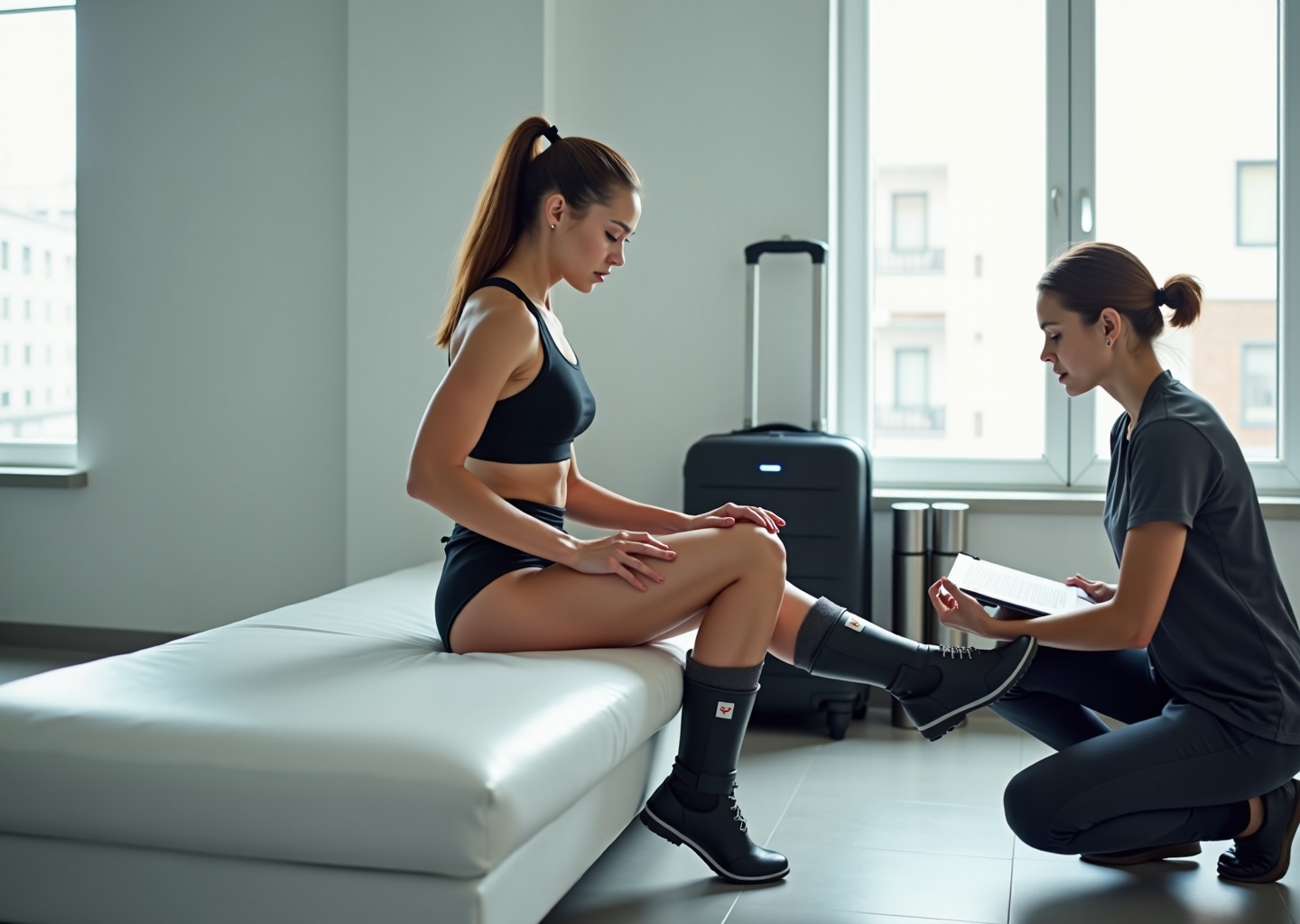
Compression boots and dynamic pneumatic compression have become standard tools in pro and amateur recovery rooms. This article reviews 20+ scientific studies, explains physiological mechanisms, compares device types, and gives practical programming and safety guidance so athletes, coaches, and sports med teams can decide whether and how to use compression boots effectively.
What the scientific evidence shows across 20+ studies
After exploring the physiological theories behind compression boots, the big question remains: does the science actually back them up? Sifting through the research can feel overwhelming, with studies pointing in different directions. To clear things up, we’ve synthesized over 20 randomized controlled trials, crossover studies, and major systematic reviews published to date. Here’s a breakdown of what the evidence says for key recovery outcomes.
Subjective Soreness (DOMS)
This is where compression boots show their most consistent promise. If your main goal is to feel less sore, the evidence is on your side. A large 2024 systematic review, which pooled data from 17 studies involving 319 athletes, found that boots provide a modest but statistically significant reduction in delayed onset muscle soreness (DOMS), particularly at the 48-hour mark post-exercise. This aligns with earlier research, like a 2015 study by Sands et al. on elite Olympic athletes that found dynamic compression increased the pressure-to-pain threshold, meaning their muscles were less tender to the touch after treatment. The general consensus is that while boots won’t eliminate soreness entirely, they can take the edge off. Evidence Grade: Moderate
Objective Performance
Here, the picture becomes much less clear. Feeling less sore doesn’t automatically translate to better performance in your next session. The majority of studies have failed to find significant improvements in objective performance metrics like repeat sprint ability, vertical jump height, or power output. The same 2024 review that supported soreness reduction found only small and inconsistent improvements in muscle function recovery. Some research, like a recent study on the Therabody RecoveryAir boots, showed no difference in power output during sprints after a recovery session with the device. For now, there is little compelling evidence to suggest that using compression boots will directly make you faster or stronger in your next workout. Evidence Grade: Weak
Biomarkers of Recovery (CK, IL-6, Lactate)
The data on physiological markers is decidedly mixed and often contradictory. Let’s start with lactate. An ACE-sponsored study in 2021 found that NormaTec boots cleared blood lactate significantly faster than passive rest in the first 30 minutes. However, the same study showed that a simple active recovery (like a light spin on a bike) was even more effective than the boots after the 15-minute mark. For markers of muscle damage (Creatine Kinase, or CK) and inflammation (Interleukin-6, or IL-6), the 2024 review found inconsistent results, with no clear pattern of reduction. Evidence Grade: Mixed
Swelling and Edema
Based on their core mechanism of action, it’s logical that boots would be effective at reducing fluid accumulation. The evidence, though more limited than for soreness, supports this. A few studies focusing on recovery from intense eccentric exercise have demonstrated that intermittent pneumatic compression can reduce limb swelling. This is particularly relevant for athletes dealing with edema from long-haul travel or during the acute phase of certain injuries (under medical guidance). Evidence Grade: Moderate (for targeted edema)
Overall Perceived Recovery
Perhaps one of the most significant effects is psychological. Athletes consistently report feeling better, more relaxed, and more recovered after using compression boots, even when objective markers don’t change. This powerful placebo effect should not be dismissed. Feeling recovered can improve mood, motivation, and readiness to train. This subjective benefit is a primary reason why these devices remain so popular in elite and amateur sports alike. Evidence Grade: Moderate
It’s crucial to view these findings with a critical eye. Much of the research is hampered by methodological limitations. Many studies use very small sample sizes (fewer than 20 participants), making it hard to draw broad conclusions. Blinding is nearly impossible—athletes know when they are receiving the treatment—making it difficult to separate the physiological effects from the psychological belief that the treatment is working. Furthermore, there is significant variability between devices, pressures, and treatment durations used in studies, creating an “apples to oranges” comparison problem. Finally, some studies are funded by the device manufacturers themselves, which can introduce potential bias. Until we have larger, standardized, and independently funded trials, the evidence will likely remain fragmented.
Optimal protocols and device settings based on the literature and practice
Knowing that compression boots can offer benefits is one thing; knowing exactly how to use them is another. The effectiveness of any session hinges on dialing in the right settings. Programming isn’t a one-size-fits-all formula. It requires understanding the interplay between pressure, duration, and frequency to match your specific goal. The science provides a strong foundation, but elite practice shows us how to fine-tune these variables for real-world results.
The three core components you can control are pressure, inflation pattern, and time. Most consumer devices offer a pressure range between 20–100 mmHg, while clinical-grade systems can go higher, up to 120 mmHg. Higher pressures can theoretically move more fluid, but the goal is a firm, therapeutic squeeze, not a painful tourniquet effect. Comfort is paramount; if you have to grit your teeth, the pressure is too high. The most common and well-researched inflation pattern is sequential distal-to-proximal, where chambers inflate one by one from the foot up to the hip. This mimics the natural muscle pump action that pushes fluid out of the limbs. Some devices also offer a peristaltic or pulsing pattern, which can feel different but aims for a similar outcome.
Session duration and frequency depend entirely on the context. While you might see options for 60 minutes or more, most research, like the ACE-supported study on lactate clearance, focuses on protocols around 30 minutes. There are diminishing returns; a 60-minute session isn’t necessarily twice as good as a 30-minute one. The most common application is a single session immediately after a hard workout. However, during intense training blocks or multi-day competitions, daily use might be beneficial. For specific situations like long-haul travel, you might use them both before and after the flight.
To make this practical, here are some evidence-based templates you can use as a starting point and individualize.
-
Post-Training/Competition Recovery
This is the most common use case, aimed at reducing muscle soreness and kick-starting recovery. The settings used in studies showing modest DOMS reduction are a great place to start.
Suggested Protocol: Set duration for 30–40 minutes at a pressure of 40–60 mmHg. Use a sequential inflation pattern. This can be done once in the hours following a demanding session. -
Travel and Edema Mitigation
Long periods of sitting, like on a plane or bus, can cause fluid to pool in the lower legs. This protocol is designed to counteract that stagnation.
Suggested Protocol: Aim for a longer session of 45–60 minutes at a slightly higher pressure of 50–70 mmHg. Using the boots before and after a long flight can help you arrive feeling fresher and less swollen. -
Acute Injury Edema Control (Under Clinician Supervision)
For managing swelling from a recent soft tissue injury, compression can be a useful tool, but it must be used cautiously. This is not a protocol to self-program.
Suggested Protocol: Under the guidance of a physical therapist or doctor, use shorter sessions of 20–30 minutes at a controlled, lower pressure. The clinician will determine the appropriate setting to avoid compromising blood flow to the injured area. -
Pre-Activation and Warm-up
While less common, some athletes use boots for a short period before training to increase blood flow and feel “looser.” This should not replace an active warm-up.
Suggested Protocol: A brief 10–15 minute session at a low to moderate pressure (30–50 mmHg) can help stimulate circulation without inducing fatigue.
Regardless of the protocol, always start with a lower pressure and gradually increase it over several minutes to a level that feels comfortable and effective. This is your ramp-up period. During the session, the compression should feel firm but never painful, and you shouldn’t experience any numbness or tingling. After you finish, check your skin for excessive redness or deep indentations that don’t fade quickly; if you see them, use a lower pressure next time. Individual factors like limb size, muscle mass, and personal sensitivity mean you’ll need to experiment to find what works best for you. The templates are the map, but you have to drive the car.
How to choose the right device and integrate compression boots into athlete programs
Navigating the market for compression boots can feel overwhelming, but focusing on key features and how a device fits into your overall recovery plan simplifies the process. The right choice depends on your goals, budget, and environment, whether you’re an individual athlete or outfitting an entire team.
Device Types and Key Features to Compare
The first distinction to make is between medical-grade Intermittent Pneumatic Compression (IPC) devices and consumer-focused recovery boots. Medical-grade systems are often prescribed for conditions like lymphedema and are built to precise clinical standards for pressure accuracy and gradient delivery. Consumer boots, while using similar technology, are designed for athletic recovery, prioritizing portability, user experience, and affordability. For most athletes, a high-quality consumer model is sufficient.
When comparing models, consider these features.
Pressure Range and Accuracy
Most consumer boots operate between 20-100 mmHg. While higher pressures might feel more intense, the effective ranges discussed in the previous section (typically 40-70 mmHg) are what matter. Look for devices that deliver consistent, accurate pressure, as this is crucial for achieving the desired physiological effect. Some brands are more transparent about their pressure calibration than others.
Chamber Count and Configuration
Boots have inflatable chambers, usually four to eight. More chambers can create a smoother, more precise pressure wave up the limb. Overlapping chambers prevent gaps in compression, providing a more uniform experience. This is a feature where higher-end models often excel.
Inflation Algorithm
The most common is a sequential, distal-to-proximal pattern, where chambers inflate from the foot towards the hip and stay inflated until the cycle is complete. Some systems use a peristaltic or “pulsing” pattern, where chambers inflate and deflate in a wave-like motion. The evidence doesn’t definitively favor one over the other for all outcomes, but sequential inflation is the most studied for promoting fluid return.
Portability and Battery Life
If you plan to use the boots while traveling or immediately after training away from home, a lightweight system with a long-lasting battery is essential. Check the device’s total weight, the bulkiness of the pump, and the rated battery life, which can range from one to three hours.
App Integration and Programmability
Many modern systems connect to a smartphone app, allowing you to customize pressure, duration, and zone settings. This can be useful for tailoring sessions to specific needs, like focusing pressure on the calves after a long run.
Warranty, Service, and Hygiene
A solid warranty (typically one to two years) and responsive customer service are important. The boots themselves should be made of durable, non-porous material that is easy to wipe down and disinfect, which is especially critical in a multi-user team setting.
Price Bands and Return on Investment
Prices for compression boot systems generally fall into three tiers.
- Entry-Level ($400 – $700) These systems offer basic sequential compression with limited chambers and programmability. They are a good starting point for individuals curious about the technology.
- Mid-Range ($800 – $1,300) This is the sweet spot for most serious athletes and teams, offering more chambers, better build quality, app integration, and often portability. Brands like Therabody and NormaTec are prominent here.
- Pro/Medical-Grade ($1,500+) These devices provide the highest precision, durability, and customization, making them suitable for clinical settings or professional teams where they will see heavy, daily use.
For a team, the ROI on a durable, multi-user system is clear. The cost per athlete per session becomes very low over the lifespan of the device. For an individual, the investment is weighed against the cost of other recovery modalities like professional massage. If the boots promote consistent recovery habits, the value can be significant.
Integrating Boots into a Holistic Recovery Program
Compression boots are a passive recovery tool, and they work best when combined with other strategies. They are not a replacement for sleep, nutrition, or active recovery.
Think of boots as a tool to enhance fluid dynamics and reduce perceived soreness. They are particularly useful after high-volume or high-intensity sessions. They are not a primary tool for addressing muscle damage in the way that nutrition supports cellular repair.
Here are some practical combinations.
- Post-Foam Rolling Use a foam roller or massage gun to address specific trigger points and fascial restrictions first, then use the boots for a general flush to clear metabolic waste.
- After Cold Water Immersion An ice bath primarily targets inflammation and pain perception through vasoconstriction. Using compression boots 30-60 minutes after CWI can help restore blood flow and clear residual fluid once the initial anti-inflammatory goal is achieved.
Sample Weekly Recovery Templates
| Day | In-Season (e.g., Soccer) | Off-Season (e.g., Strength Block) |
|---|---|---|
| Monday (High Intensity) | Post-Training: 30 min boots (moderate pressure). Evening: Sleep optimization (cool, dark room). | Post-Lifting: 40 min boots (moderate-high pressure). Nutrition: High-protein meal within 60 min. |
| Tuesday (Active Recovery) | AM: 20 min light bike/swim. PM: 20 min boots (low pressure) before bed. | AM: Mobility/Yoga. PM: Contrast shower or 25 min boots. |
| Wednesday (Skill/Tactical) | Post-Training: Foam roll + 20 min boots. | Post-Lifting: Active recovery (walk). Evening: 30 min boots while reading. |
| Thursday (Rest/Travel) | Travel Day: 45 min boots upon arrival to reduce swelling. | Full Rest Day: Focus on hydration and nutrition. Optional 20 min boots if feeling heavy. |
| Friday (Pre-Game) | Light activation session. No boots or short 15 min session if desired. | Post-Lifting (Volume): 45 min boots. Nutrition: Calorie surplus for adaptation. |
Team Procurement Checklist and Decision Matrix
For coaches and sports medicine staff, purchasing for a team requires a structured approach.
Procurement Checklist
- Clinical Evidence Does the vendor provide research (preferably independent) supporting their device’s claims?
- Trial Period Can you get a demo unit to test with athletes for a week or two?
- User Feedback Is the system intuitive for athletes to use? Is it comfortable?
- Durability & Hygiene Does the construction feel robust enough for daily team use? Is it easy to clean between users?
- Vendor Support What is the warranty, and how responsive is the service department for repairs or replacements?
Purchasing Decision Matrix
| Factor | High Priority | Medium Priority | Low Priority |
|---|---|---|---|
| Budget | Team setting with high usage justifies higher cost for durability. | Individual user seeking best value. | Trying the technology for the first time. |
| Portability | Frequent team travel. | Athlete takes to gym/home. | Stationary use in a dedicated recovery room. |
| Clinical Claims | Rehab setting or data-driven pro team. | Athlete focused on marginal gains. | Primary goal is subjective feel-good recovery. |
| Service/Warranty | Team environment where downtime is costly. | Serious individual user. | Casual user. |
Frequently Asked Questions: Common Concerns for Athletes and Coaches
Do compression boots speed up muscle repair and reduce DOMS?
Yes, they can help you feel less sore. The evidence for reducing Delayed Onset Muscle Soreness (DOMS) is one of the more consistent findings. A 2024 systematic review analyzing 17 different studies concluded that boots provide modest but real benefits in reducing muscle soreness, especially around 48 hours after exercise. However, the evidence for accelerating underlying muscle repair is much weaker. While feeling better is a huge plus, studies looking at biomarkers of muscle damage, like creatine kinase, show mixed and inconsistent results. A 2021 review in PubMed concluded that for endurance athletes, intermittent pneumatic compression (IPC) was not an effective way to reduce signs of exercise-induced muscle damage.
Degree of Certainty: Moderate for reducing the sensation of soreness; low for speeding up physiological muscle repair.
Practical Takeaway: Use boots with the primary goal of managing soreness and feeling fresher. Don’t assume they are healing muscle tissue at a faster rate.
When to Seek Clinician Guidance: If you experience sharp, persistent, or worsening pain that goes beyond typical DOMS, as this could signal an actual injury.
Are compression boots better than static compression garments?
The jury is still out. Theoretically, the dynamic, sequential squeezing of boots should be more effective at moving fluid than the passive pressure of socks or tights. However, direct comparisons are scarce and inconclusive. A recent review that looked at six studies comparing dynamic compression to other methods like static garments, stretching, and massage found no clear winner. The choice often comes down to practicality and preference.
Degree of Certainty: Low. There is no scientific consensus that dynamic compression is superior to static for recovery.
Practical Takeaway: Boots offer a dedicated, timed recovery session that feels proactive, which many athletes enjoy. Garments are more passive, cheaper, and can be worn for longer periods, including during sleep or travel. Choose based on your budget, lifestyle, and what feels best for you.
When to Seek Clinician Guidance: A professional might recommend a specific type of compression for a medical condition like lymphedema or post-surgical swelling, but for general athletic recovery, it’s an open choice.
How often and how long should I use them?
Most research protocols and user guidelines suggest sessions lasting between 20 and 60 minutes. For frequency, daily use after intense training sessions is a common approach. There doesn’t appear to be a magic number, as the ideal protocol depends on your training volume, intensity, and individual response.
Degree of Certainty: High for the common-use range, but low for a scientifically “optimal” protocol.
Practical Takeaway: A good starting point is a 30-minute session after your hardest workouts. From there, you can adjust the duration and frequency. Some athletes use them for a shorter 15-20 minute session as part of a warm-up, while others prefer a longer 45-60 minute session in the evening to unwind.
When to Seek Clinician Guidance: If using boots as part of a rehabilitation plan for an injury, your physical therapist will prescribe a specific duration and frequency.
What pressures are safe and effective?
Safe and effective pressures for most consumer devices typically fall between 30 and 80 mmHg. It’s crucial that the pressure feels like a firm massage, not a painful vise grip. Higher pressure is not necessarily better and can be counterproductive or even dangerous if it restricts blood flow.
Degree of Certainty: High for safety within typical consumer device limits. Moderate for effectiveness, as the “best” pressure is highly individual.
Practical Takeaway: Start low (around 30-40 mmHg) and gradually increase until you find a setting that is comfortably snug. Your comfort is the best guide. Pain or numbness means the pressure is too high.
When to Seek Clinician Guidance: Anyone with a history of deep vein thrombosis (DVT), peripheral artery disease, varicose veins, or unmanaged blood pressure should consult a doctor before using compression boots.
Will they improve next-day performance or only perceived recovery?
The evidence points much more strongly toward improved perceived recovery. Athletes consistently report feeling fresher, lighter, and less sore after using boots. However, translating that feeling into measurable performance gains the next day is where the research becomes murky. Multiple studies on runners and cyclists have failed to show significant improvements in subsequent performance tests like time trials or power output. The psychological benefit of feeling recovered is real and valuable, but a direct physiological performance boost is not well-supported.
Degree of Certainty: High for improving subjective feelings of recovery. Low for directly improving objective performance metrics.
Practical Takeaway: Use boots to help you feel ready for your next session. The mental boost from feeling less sore can be powerful, but don’t expect them to be a shortcut to better performance numbers.
When to Seek Clinician Guidance: Not applicable.
Are there proven long-term benefits for injury prevention?
No, there is no direct scientific evidence that using compression boots long-term will prevent injuries. The idea is theoretical: if you recover better, you can train more effectively and with less fatigue, which could indirectly lower your injury risk. But this link has not been established in long-term studies. Injury prevention is a complex equation involving strength training, load management, sleep, and nutrition.
Degree of Certainty: Very low. This is currently more of a marketing claim than a scientific fact.
Practical Takeaway: Think of boots as a tool for managing day-to-day soreness, not as a shield against injury. Prioritize proven injury prevention strategies first.
When to Seek Clinician Guidance: A physical therapist can help you build a robust, evidence-based injury prevention program.
Conclusions and practical takeaways for coaches, athletes, and clinicians
After reviewing the physiological mechanisms and the extensive body of scientific literature, we can distill our understanding of compression boots into a set of practical conclusions. The core principle of dynamic compression, which involves enhancing blood and lymphatic flow, is physiologically sound. The sequential squeezing action effectively mimics the body’s natural muscle pump, helping to move fluid and metabolic byproducts out of the limbs. However, the translation of these acute physiological changes into consistent, measurable athletic improvements is where the evidence becomes more nuanced. The strongest and most consistent finding across numerous studies is the positive impact on subjective recovery. Athletes simply report feeling less sore and more recovered after using the boots.
Here are the most important takeaways for implementing this technology:
- Who Should Consider Them? Athletes with high training volumes, those who frequently experience significant delayed onset muscle soreness (DOMS), or individuals who travel often for competition may find the most value. For professional teams or well-funded programs, they can be a valuable addition to a comprehensive recovery toolkit. For the average recreational athlete, they fall into the category of a luxury rather than a necessity.
- Likely vs. Uncertain Outcomes. You can reasonably expect a reduction in perceived muscle soreness and a decrease in temporary swelling, especially after intense eccentric exercise or long periods of travel. What remains less certain are direct improvements in next-day objective performance metrics like power output, sprint speed, or jump height. As a 2024 analysis of multiple studies concluded, the link between feeling better and performing better isn’t always direct.
- First-Step Protocols. If you are new to compression boots, start with a conservative approach. A good initial protocol is a 20 to 30-minute session at a moderate, comfortable pressure (around 40–60 mmHg) within a few hours after a hard workout. Always perform a safety check by ensuring there is no pain, numbness, or tingling. Check your skin afterward for any signs of irritation or compromised circulation, especially around the ankles and knees.
- When to Escalate or Avoid. The use of compression boots to manage swelling from an acute injury like an ankle sprain should only be done under the guidance of a clinician or physical therapist. They can determine the appropriate pressure and timing to avoid exacerbating the injury. You should avoid these devices entirely if you have known circulatory conditions such as deep vein thrombosis (DVT), peripheral artery disease, severe edema, or any active skin infections or open wounds on your legs.
The current body of research, while growing, has notable gaps that need to be addressed to provide clearer guidelines. Future studies should prioritize:
- Larger Randomized Controlled Trials (RCTs). Many existing studies have small sample sizes (often fewer than 20 participants), which limits their statistical power and generalizability.
- Standardized Protocols. There is significant variability in the pressures, durations, and timing used in research, making it difficult to compare results across studies. Establishing standardized, evidence-based protocols is crucial.
- Long-Term Outcomes. We have very little data on the long-term effects of regular compression boot use. Research is needed to determine if there are any cumulative benefits for injury prevention or chronic training adaptations over a full athletic season.
So, are compression boots worth the investment? The answer depends on your goals, budget, and expectations. If your primary aim is to manage muscle soreness and enhance your sense of recovery, the evidence suggests they can be an effective tool. The psychological benefit of dedicating time to a recovery ritual should not be underestimated. However, if you are seeking a guaranteed boost in next-day performance, the cost may not justify the uncertain returns. They are best viewed as a supplementary recovery aid, not a replacement for the foundational pillars of recovery: sleep, nutrition, and intelligent training programming. Implemented responsibly, they can be a welcome part of a modern athlete’s routine, but they are not a shortcut to success.
Sources
- Compression Boots Benefits: Science-Backed Recovery for Athletes — Multiple studies have demonstrated that compression recovery boots can help maintain or even improve flexibility following intense exercise. The 2021 study by …
- Intermittent pneumatic compression boots for post-exercise recovery — A 2024 review analysed 17 studies involving 319 athletes and found that compression boots provided modest recovery benefits: … A runner putting …
- ACE-Supported Research: Can Compression Devices Enhance … — The researchers concluded that both NormaTec and active recovery cleared BLa significantly faster than passive recovery over a 30-minute recovery period.
- New Study Shows How Therabody's RecoveryAir Pneumatic … — Researchers of a new study put Therabody's Recovery Air 3 PRO pneumatic compression boots to the test to see if they enhanced recovery and subsequent exercise …
- Intermittent Pneumatic Compression Boot Use Elevates Blood … — In conclusion, limited research demonstrates that IPC use influences performance or recovery from exercise. Our data suggest IPC use has no effect on …
- Compression Boots: Faster Recovery or Just Placebo? — Numerous studies on runners and cyclists have failed to show any improvement in the speed or effectiveness of recovery when using PCDs.
- The Effects of Intermittent Pneumatic Compression on the Reduction … — All studies concluded IPC was not an effective means of improving the reduction of EIMD in endurance-trained athletes.
- A Randomized Controlled Trial of Massage and Pneumatic … – jospt — The present study examined the effectiveness of massage and intermittent sequential pneumatic compression on recovery after participating in …
Legal Disclaimers & Brand Notices
The content provided in this article is for informational and educational purposes only. It is not intended to be a substitute for professional medical advice, diagnosis, or treatment. Always seek the advice of a qualified healthcare provider, physician, or physical therapist with any questions you may have regarding a medical condition, injury, or the use of recovery devices, especially if you have pre-existing conditions such as deep vein thrombosis (DVT), peripheral artery disease, or unmanaged blood pressure.
All product names, logos, and brands mentioned in this article are the property of their respective owners. Specific brand names referenced include Therabody® and NormaTec®. Reference to these specific products does not imply endorsement or affiliation unless explicitly stated.