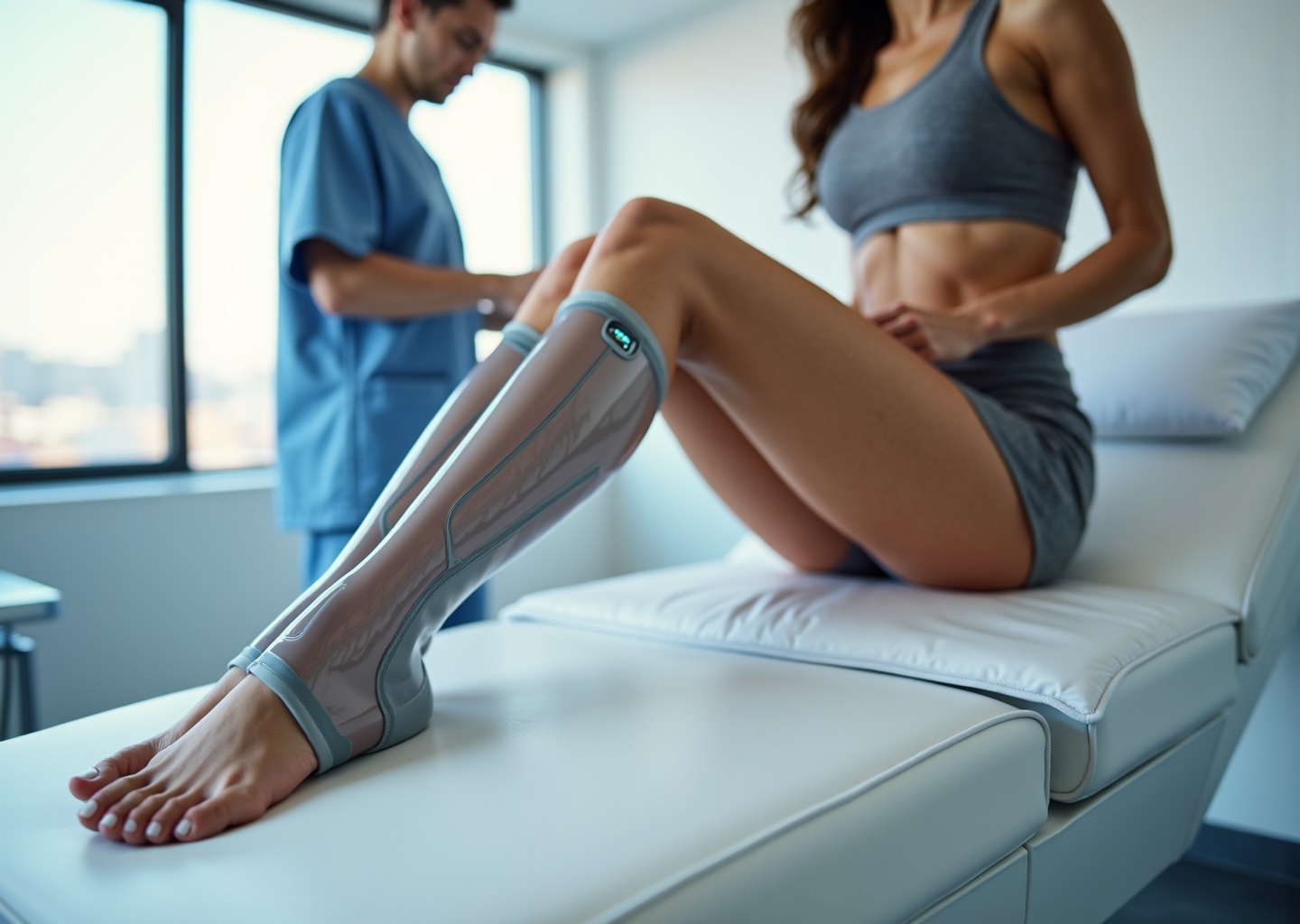
Compression boots and dynamic pneumatic systems are increasingly used by athletes for recovery and by clinics for aesthetic goals. This article explores whether compression boots can help reduce the appearance of cellulite, how they work physiologically, and practical guidance on choosing, using, and programming systems to optimize recovery and cosmetic results.
How compression works and what cellulite really is
To understand how compression boots might improve the appearance of cellulite, we first need to look at what’s happening under the skin. Cellulite isn’t just about fat. It’s a structural issue involving the interplay between subcutaneous fat, connective tissue, and fluid dynamics. Imagine small pockets of fat just beneath your skin. These fat pockets are separated by fibrous cords called septae, which anchor the skin to the muscle underneath. In women, these septae often run vertically, straight up and down. When fat cells enlarge or fluid accumulates, they push upward against the skin, while the septae continue to pull down. This push-pull effect creates the characteristic dimpling or “orange peel” texture we call cellulite.
The situation is often made worse by compromised microcirculation and lymphatic drainage. Your circulatory system delivers oxygen and nutrients, while your lymphatic system is like the body’s waste disposal service, clearing out excess fluid, proteins, and metabolic byproducts from the space between cells, known as the interstitial space. When this system is sluggish, interstitial fluid can build up, a condition known as local edema. This excess fluid increases the volume and pressure within those fat compartments, making the dimples more pronounced. Low-grade, chronic inflammation can also contribute by further impairing circulation and damaging the dermal connective tissue, weakening the skin’s supportive structure over time. So, cellulite is really a combination of fat structure, connective tissue tension, and fluid retention.
This is where compression therapy enters the picture. Its primary function is to apply external mechanical pressure to the limbs to improve fluid movement. We can separate compression into two main types. Static compression, like the kind you get from compression socks or tights, provides a constant, sustained pressure. It’s great for preventing fluid from pooling but is less active in moving fluid that has already accumulated. Dynamic sequential compression, the technology used in compression boots, is a more active process. These systems have multiple air chambers, or segments, that inflate and deflate in a specific sequence.
The key to their effectiveness is gradient pressure. The boots are programmed to apply the highest pressure at the point furthest from the heart, typically the foot or ankle, with the pressure gradually decreasing in each subsequent chamber up the leg. This distal-to-proximal (far-to-near) sequence creates a wave-like milking action. This rhythmic squeezing physically pushes deoxygenated blood through the veins back toward the heart, enhancing venous return. More importantly for cellulite, it propels stagnant lymphatic fluid out of the limbs and back into central circulation. By mechanically assisting the lymphatic system, dynamic compression directly targets the local edema and fluid retention that can worsen the appearance of dimples. Studies on patients with lymphedema and chronic venous disease, conditions defined by severe fluid management issues, have consistently shown that sequential pneumatic compression can significantly reduce limb circumference and tissue fluid. While these trials weren’t designed to measure cellulite, their findings support the core mechanism that could lead to a smoother skin surface.
The existing clinical evidence directly linking compression boots to a reduction in cellulite is still emerging and often comes from smaller-scale trials or observational reports. High-quality, large-scale, placebo-controlled studies measuring long-term changes in skin appearance are not yet common. Most of the support comes from understanding the physiological mechanisms. By reducing edema and improving circulation, the pressure in the subcutaneous fat compartments is lessened, which can temporarily reduce the protrusion of fat lobules and make the skin appear smoother. The change is primarily related to fluid dynamics, not a permanent alteration of fat cells or fibrous septae, so it is important to set realistic expectations.
Interestingly, the very same mechanisms that offer a potential aesthetic benefit are what make compression boots so valuable for athletic recovery. When you engage in intense exercise, your muscles sustain microtrauma, leading to an inflammatory response. This process involves swelling (edema) and the accumulation of metabolic byproducts like lactate. The soreness you feel, often called delayed onset muscle soreness (DOMS), is closely linked to this inflammation and fluid buildup.
The dynamic, gradient compression that helps flush interstitial fluid to reduce the appearance of cellulite also works to clear out the inflammatory byproducts and excess fluid from overworked muscle tissue. By enhancing venous return and lymphatic drainage, the boots help remove lactate and other metabolic waste from the muscles more efficiently. At the same time, the intermittent pressure changes can increase microvascular perfusion, meaning more oxygen-rich blood flows to the muscle tissue once a compression cycle is complete, providing the necessary resources for repair and reducing soreness. The core mechanism—improved fluid dynamics—serves both the athlete seeking faster recovery and the individual looking for a temporary improvement in skin texture. The primary difference lies in the target tissue: for recovery, the focus is on the muscle, while for aesthetics, it is on the subcutaneous fat and dermal layers.
Practical Guide: Choosing, Using, and Programming Compression Systems
Choosing the Right System for Aesthetic Goals
When your primary goal is improving skin texture, the type of device matters. Static compression garments, like leggings or stockings, provide constant pressure and are great for daily support. However, for a more active intervention, dynamic or sequential pneumatic compression (IPC) systems are superior. These are the “boots” that inflate and deflate in a programmed sequence. Consumer-grade models are now widely available and effective, while professional systems found in clinics may offer higher pressures and more complex programming. For aesthetic use, a good consumer model is typically more than sufficient.
When comparing devices, look at a few key specifications.
- Pressure Range (mmHg): Medical-grade pressures can exceed 120 mmHg, but for aesthetic and general recovery purposes, a range of 40-80 mmHg is typically sufficient and well-tolerated. It’s more important to be comfortable than to use maximum pressure.
- Chamber Count: Devices have multiple air chambers, or segments, that inflate sequentially. A higher number of chambers (e.g., 6-8 instead of 4) can create a smoother, more precise wave of pressure, better mimicking the flow of manual lymphatic drainage.
- Programming Modes: Most systems offer different inflation patterns. A sequential mode, where each chamber inflates and stays inflated until the whole leg is compressed, is excellent for pushing fluid proximally. A peristaltic or “pulsing” mode, where chambers inflate and deflate in a wave-like motion, can feel more like a massage and is also effective for circulation.
Programming for Skin Improvement and Safety
Consistency is more important than intensity. A good starting point for an aesthetic or recovery protocol is a 30-45 minute session, 3 to 5 times per week. You can integrate this into your routine easily, perhaps while reading or watching TV in the evening. For pressure, start low—around 40 mmHg—and gradually increase to a level that feels firm but not painful, stopping at a level that feels effective without causing discomfort. The sensation should be one of a deep, relieving squeeze.
To maximize benefits, consider timing. Using the boots after a workout can help with both muscle recovery and flushing out exercise-related fluid. Some users also find a session before bed helps them feel lighter and less puffy in the morning. You can also pair compression with other treatments. For instance, apply a topical firming or cellulite cream after your session, not before, as the skin may be more receptive to absorption once circulation is boosted. However, remember that compression is a supplement to, not a replacement for, the foundational pillars of skin health: a balanced diet, regular exercise, and proper hydration.
Safety and Contraindications
While generally safe, compression therapy is not for everyone. It’s vital to be aware of contraindications. You should not use compression boots and should consult a doctor if you have any of the following conditions:
- Known or suspected Deep Vein Thrombosis (DVT)
- Acute infections in the limb, such as cellulitis (a bacterial skin infection, not to be confused with cellulite)
- Uncontrolled congestive heart failure
- Severe peripheral arterial disease
- Certain complications during pregnancy (always seek medical clearance)
Stop treatment immediately if you experience sharp pain, numbness, tingling, or skin discoloration that doesn’t resolve quickly. These could be signs that the pressure is too high or that an underlying issue needs medical attention. A comprehensive review on the risks of medical compression provides a clinical perspective on when to exercise caution.
Measuring Results and Setting Expectations
To track your progress, be objective. Rely on more than just a glance in the mirror. Take high-resolution photos of the target area once a week, in the same lighting, at the same time of day, to track subtle changes objectively. Use a flexible measuring tape to record the circumference of your thighs or other areas before and after a session, and then track weekly changes. You can also use patient-reported outcomes; simply note how your legs feel. Do they feel lighter, less “heavy,” or less swollen? These short-term changes in fluid volume are the most immediate and measurable effects. Over time, this consistent fluid management may lead to a visible improvement in skin texture, but it’s a marathon, not a sprint.
Frequently Asked Questions
How do compression boots compare to manual lymphatic drainage (MLD) or laser treatments?
They work very differently. Compression boots provide automated, mechanical pressure to move fluid, similar in principle to some forms of lymphatic massage but less targeted than a therapist-led MLD session. Professional treatments like radiofrequency and laser therapy use energy to heat tissue, aiming to stimulate collagen production and break down fat cells for more significant, longer-lasting structural changes. Boots are non-invasive and great for managing fluid, while clinical treatments are designed for tissue remodeling.
Practical Tip: Some users combine treatments, using compression boots for maintenance and to reduce swelling between professional sessions. Always get approval from your clinician before combining therapies.
Will my health insurance cover compression boots for cellulite?
It is extremely unlikely. Insurance providers classify cellulite reduction as a cosmetic procedure, which is not covered. Coverage is typically reserved for prescribed medical devices used to treat diagnosed conditions like lymphedema or chronic venous insufficiency.
Practical Tip: If you have a qualifying medical diagnosis, speak with your doctor about getting a prescription for a medical-grade pneumatic compression device, which may be partially or fully covered.
Can athletes use compression boots right before a competition?
Yes, many athletes use them as part of their warm-up. A short, low-to-moderate pressure session (e.g., 15-20 minutes) can help increase circulation and make legs feel light and responsive without causing fatigue. It is not a replacement for an active warm-up but can be a useful addition.
Practical Tip: Avoid a long or high-pressure session immediately before competing, as this could be overly relaxing and potentially hinder explosive muscle performance.
Do compression boots really help with muscle soreness and DOMS?
Yes, this is one of the most well-supported benefits of dynamic compression. By increasing blood flow and helping to flush out metabolic waste products associated with intense exercise, the boots can significantly reduce the severity and duration of delayed onset muscle soreness (DOMS). This allows athletes to recover faster and train more consistently.
Practical Tip: For optimal recovery, use the boots within a few hours after your workout. A session of 30 to 60 minutes is often effective for reducing next-day soreness.
Conclusions and practical takeaways
Dynamic compression is a powerful tool for athletic recovery and a compelling, if nuanced, option for aesthetic enhancement. The key is understanding what these systems can and cannot do. At its core, the effectiveness of compression therapy hinges on its ability to manipulate fluid dynamics. The rhythmic pressure gradient enhances circulation and supports the lymphatic system, which is crucial for removing metabolic waste and excess fluid from the limbs.
When applied to cellulite, this mechanism can temporarily reduce the fluid buildup that exacerbates the dimpled appearance of skin, resulting in a smoother, tighter look. However, it is critical to remember that this is a temporary effect of fluid management, not a permanent structural change to fat cells or connective tissue. For lasting results, compression must be part of a broader strategy that includes a healthy diet, regular exercise, and proper hydration. By integrating compression boots as a supplementary tool within a holistic wellness routine, users can effectively leverage their benefits for both physiological recovery and cosmetic improvement. If you have persistent medical issues like chronic swelling or are seeking significant, long-term changes in cellulite, it is wise to seek professional guidance from a doctor, physical therapist, or board-certified dermatologist.
References
- Are Compression Boots Good for Cellulite? – Proactive Recovery — Compression boots can help reduce the appearance of cellulite by improving circulation, enhancing lymphatic drainage, and minimising fluid …
- Can Compression Boots Help To Combat Cellulite — The boots also help flush out metabolic waste, which can contribute to uneven skin texture.
- Cellulite: does wearing compression hosiery work? — The aim of this study was to assess whether the specific 'micro-massage ridge technology' anti-cellulite compression stockings are effective in reducing the …
- Impact of Compression Therapy on Cellulitis (ICTOC) in adults … – NIH — This research aims to determine if the management of chronic oedema using compression therapy effectively delays the recurrence of lower limb cellulitis.
- Benefits of Compression Therapy — Compression treatment has been demonstrated in a few recent trials to successfully decrease and prevent the appearance of cellulite.
- Effect of pneumatic compression device and stocking use on … – NIH — This proof-in-principle study supports conservative management with graduated compression and with or without PCD for improvement in leg circumference, …
- Pressotherapy treatment for cellulite? – Advanced cellulite and skin … — As cellulite often involves water retention, pressotherapy can temporarily reduce its appearance by enhancing circulation, reducing inflammation …
- The Unexpected Benefits of Compression Therapy – Dr. Mimi Lee — A few recent studies have shown that compression therapy can be used to effectively reduce and prevent cellulite from appearing.
- Risks and contraindications of medical compression treatment — There is no evidence that compression principally increases the risk of infection. To the contrary, compression may facilitate healing in …
Legal Disclaimers & Brand Notices
Medical Disclaimer and Liability
The content of this article, including discussions of physiological mechanisms, recovery protocols, pressure settings (e.g., mmHg), and contraindications (such as Deep Vein Thrombosis, congestive heart failure, and infections), is provided for informational purposes only. It is not intended to be a substitute for professional medical advice, diagnosis, or treatment. Always seek the advice of a qualified healthcare provider, physician, or board-certified specialist with any questions you may have regarding a medical condition, procedure, or the use of compression therapy devices, especially if you have pre-existing health conditions or are pregnant. Never disregard professional medical advice or delay in seeking it because of something you have read in this article. Reliance on any information provided herein is solely at your own risk.
Trademark and Brand Notice
All product names, logos, and brands mentioned or implied in this article are the property of their respective owners. The use of these names, trademarks, and brands is for identification and informational purposes only and does not imply endorsement.