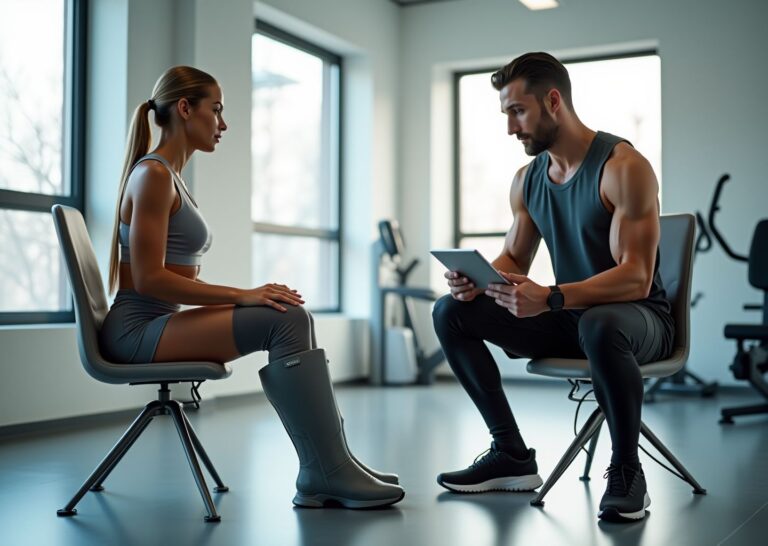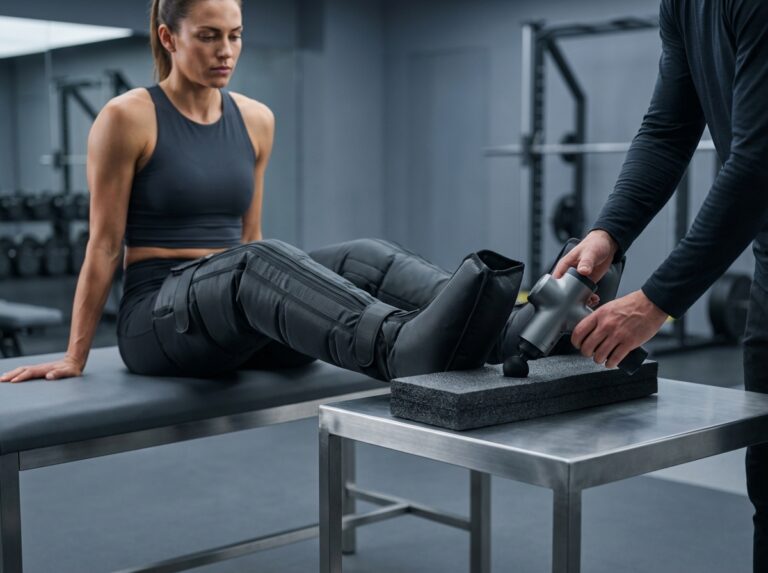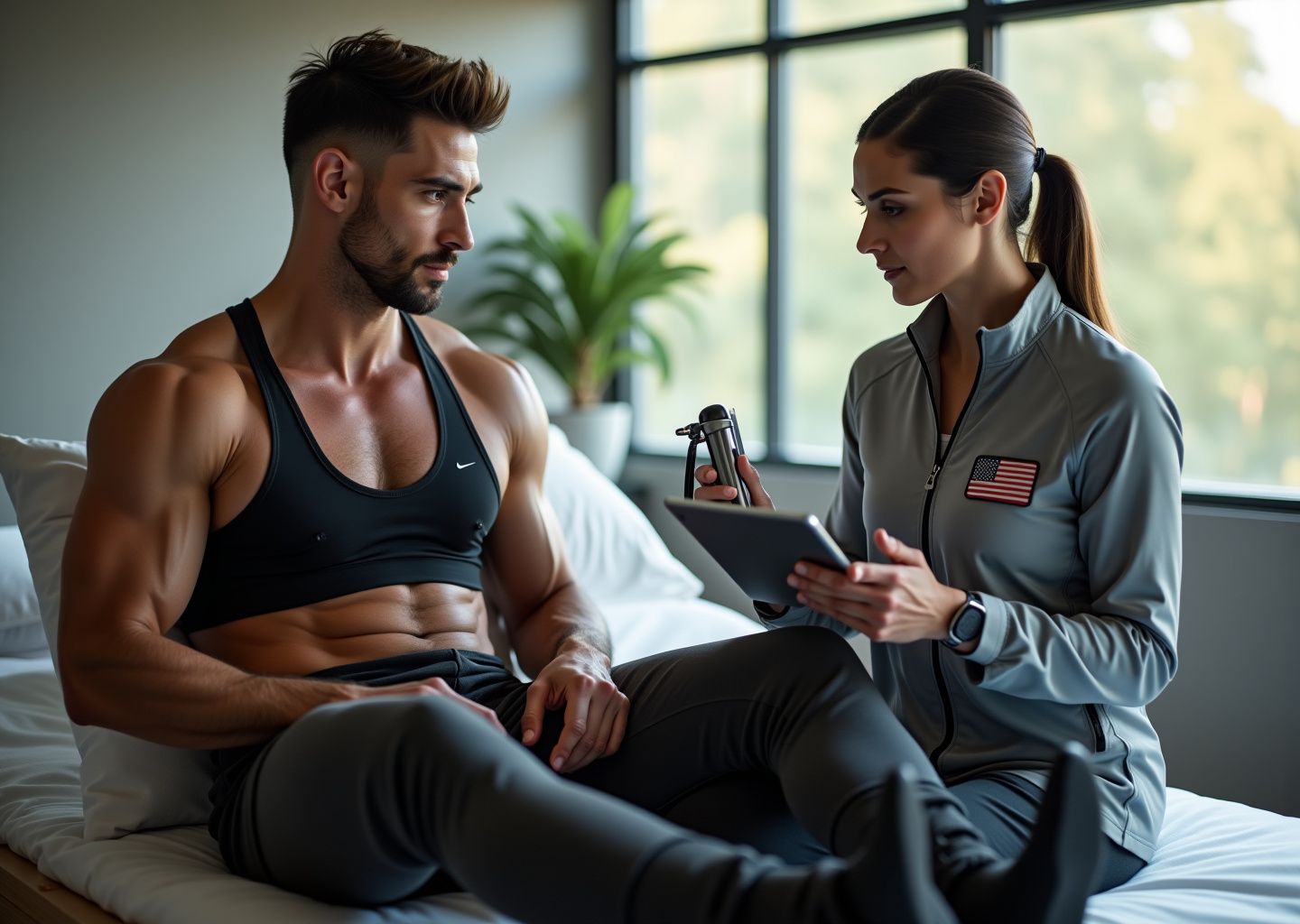
Athletes increasingly choose between compression boots and massage guns to speed recovery. This article compares the physiological mechanisms, scientific evidence, practical protocols, safety considerations, and real-world use cases to help athletes, coaches, and therapists choose or combine tools for optimal postworkout recovery and injury management.
How compression boots and massage guns work
To understand which recovery tool is right for you, it helps to first know what’s happening under the hood. Compression boots and massage guns both aim to speed up recovery, but they go about it in fundamentally different ways. One provides a systemic, passive flush, while the other delivers a targeted, active treatment.
Let’s start with compression boots, also known as intermittent pneumatic compression (IPC) devices. Imagine them as high-tech sleeping bags for your legs. A typical system includes a pair of leg sleeves connected by hoses to an electronic pump. Inside each sleeve are multiple overlapping air chambers, usually starting at the foot and moving up to the hip. When you turn the device on, the pump begins a cycle of inflating and deflating these chambers.
The magic is in how they inflate. Most modern boots use sequential compression. The chamber at your foot inflates first, squeezing the area. Then, the next chamber up your calf inflates while the foot chamber stays pressurized. This process continues up the leg, creating a wave of pressure that moves from your ankle toward your core. This action is designed to mimic the body’s natural muscle pump, the mechanism your leg muscles use to push blood and lymphatic fluid back toward your heart against gravity.
This process has several key physiological effects.
- Improved Venous Return. The squeezing motion physically pushes deoxygenated blood and metabolic byproducts, like lactate, out of the muscles and back into circulation more efficiently.
- Enhanced Lymphatic Drainage. The lymphatic system, which helps clear waste and manage inflammation, doesn’t have its own pump. It relies on muscle contractions. The boots provide a powerful, artificial version of this, helping to reduce swelling and flush out metabolic waste that accumulates after intense exercise.
- Increased Microcirculation. After the pressure cycle releases, there’s a reactive increase in blood flow to the area, bringing fresh, oxygenated blood and nutrients to the tired muscles to aid repair. Studies sometimes use biomarkers like hematocrit levels as a proxy to measure changes in blood plasma volume, reflecting these fluid shifts. A recent study on Therabody’s RecoveryAir boots, for example, noted improvements in perceived fatigue and hematocrit levels after use. You can read more about it in this new study.
Athletes often report that after a 20 to 30 minute session, their legs feel noticeably lighter, less swollen, and “fresher.” The sensation is a deep, firm hug that gradually moves up the leg, followed by a pleasant release.
Massage guns, on the other hand, operate on the principle of percussive therapy. They use a motorized head that rapidly oscillates back and forth, delivering concentrated pulses deep into muscle tissue. The effectiveness of a massage gun depends on three main variables.
- Frequency. Measured in hertz (Hz) or percussions per minute (PPM), this is how fast the head is moving. Lower frequencies are often used for muscle activation, while higher frequencies are typically for relaxation and pain relief.
- Amplitude. This is the distance the head travels with each percussion, usually measured in millimeters. A higher amplitude means a deeper massage.
- Force. Often called stall force, this is the amount of pressure you can apply before the motor stalls. A higher stall force allows for more intense, deep-tissue work.
This rapid, repetitive mechanical force creates several local effects. It dramatically increases blood flow to the specific muscle being treated, which helps deliver nutrients and clear waste. The vibrations can also help reduce neuromuscular tone, essentially telling a tight, overactive muscle to relax. This is why massage guns are so effective at reducing the sensation of stiffness.
Percussive therapy also works on a neurological level through a mechanism called transient pain gating. The intense vibration signals travel to your brain faster than pain signals. By “flooding” the sensory pathways, the vibrations can temporarily override or dampen the perception of soreness. Furthermore, the rapid strokes create a shearing force between layers of muscle and fascia, which can help break up minor adhesions and improve tissue mobility, leading to an increased range of motion.
Immediately after using a massage gun on a sore spot like a calf or quad, athletes often report a significant, albeit temporary, reduction in pain and a feeling of looseness in the muscle. The sensation is an intense, focused vibration that can quickly turn a tender knot into a relaxed muscle.
It’s crucial to understand a common misconception. Neither device “heals” tissue instantly. They are tools that create a more favorable physiological environment for your body’s natural recovery processes to occur more efficiently. They help manage symptoms like soreness and stiffness, clear metabolic byproducts, and improve circulation, but the actual muscle repair still happens on a cellular level over time. The immediate relief you feel is real, but it’s a jumpstart to recovery, not the finish line.
Evidence and effectiveness for recovery outcomes
When we look at the science behind recovery tools, it’s important to separate what we feel from what we can measure. Both compression boots and massage guns have a growing body of research behind them, but the quality and conclusions of that research vary. As of early 2024, the evidence shows clear benefits in some areas, mixed results in others, and significant gaps where more work is needed.
Let’s start with compression boots. The strongest and most consistent evidence for intermittent pneumatic compression (IPC) lies in subjective outcomes. Multiple systematic reviews and meta-analyses have concluded that users consistently report feeling less sore and more recovered after a session. This reduction in delayed onset muscle soreness (DOMS) is a significant finding. While “perceived recovery” is subjective, it’s a critical factor for an athlete’s readiness to train and compete. For many, feeling better is the primary goal. The evidence for objective physiological changes is more varied. Some studies show IPC can help reduce swelling and improve blood flow, which supports the proposed mechanisms of waste clearance. However, the data on biomarkers is less clear. Studies measuring creatine kinase (CK), a marker of muscle damage, have produced mixed results. Some find a reduction, while others show no significant difference compared to passive recovery. The same is true for lactate clearance; the effect is often minimal or non-existent. When it comes to direct performance metrics like strength, power, or endurance, the evidence is currently weak. Most well-controlled studies fail to show that using compression boots leads to a measurable improvement in your next workout’s performance compared to simply resting.
Now for massage guns. The research here points to a different set of primary benefits. The most robust evidence for percussive therapy is its effect on flexibility and muscle stiffness. A 2023 systematic review found that massage guns are effective at increasing range of motion (ROM) and reducing the sensation of stiffness. For example, some studies have documented small but statistically significant gains, like a 2.3-degree increase in shoulder internal rotation after a five-minute treatment. While this may seem minor, for athletes in sports requiring high mobility, like swimming or gymnastics, it can be meaningful. Like compression boots, massage guns also score well on reducing perceived soreness. The evidence for their impact on strength recovery is limited. While a few studies have reported very small strength gains, the real-world impact is likely trivial for most athletes. The evidence for massage guns influencing biomarkers is poor. The majority of studies show no significant effect on lactate or CK levels, suggesting their primary benefits are neuromuscular and mechanical rather than systemic or metabolic.
So, which is better? Unfortunately, high-quality, head-to-head randomized controlled trials comparing compression boots directly against massage guns for the same recovery outcomes are still incredibly rare. This is a major gap in the literature. Without these direct comparisons, we have to infer which might be better based on their individual strengths. Compression boots offer a passive, systemic treatment for the entire limb, making them well-suited for addressing general soreness, swelling, and fatigue after endurance events. Massage guns provide a targeted, active treatment for specific knots, trigger points, and tight muscle groups, making them ideal for addressing localized issues and improving mobility.
The practical takeaways depend on the athlete. For an endurance runner whose primary complaint is heavy, tired legs after a long run, the consistent evidence for reduced soreness from compression boots makes them a compelling choice. For a team sport athlete who needs to release a tight hamstring or improve shoulder mobility before the next game, the strong evidence for massage guns improving ROM and stiffness is more relevant. It’s also worth noting that many of the statistically significant findings in studies have small effect sizes. An improvement might be measurable in a lab but may not be large enough to change the outcome of a competition. The psychological benefit of feeling less sore and more prepared, however, should not be underestimated.
Looking forward, the research needs to evolve. We need long-term studies that track athletes over a full season, not just for 72 hours post-exercise. We also need more research on diverse populations, particularly female athletes, who remain underrepresented in sports science. Most importantly, direct comparison studies are essential to help athletes and coaches make truly evidence-based decisions instead of relying on theory and anecdotal reports.
How to choose use and program each tool for athletic recovery
Deciding between compression boots and a massage gun isn’t about finding a single winner. It’s about matching the right tool to your specific recovery needs, lifestyle, and budget. Both offer unique benefits, and understanding their differences is the key to making an informed choice.
Key Decision Factors
Recovery Goals
Your primary goal should guide your decision. For acute, post-workout soreness and flushing out metabolic waste from your legs after a hard run or leg day, compression boots are excellent. Their systemic approach is designed to reduce general fatigue and swelling. If you’re dealing with specific knots, trigger points, or muscle tightness in your back, shoulders, or hamstrings, a massage gun provides the targeted relief you need. For travel, boots can be invaluable for combating stiffness and swelling from long periods of sitting, while a massage gun’s portability makes it an easy travel companion for spot treatments.
Body Area Focus
This is a straightforward distinction. Compression boots are almost exclusively for the legs, and sometimes the hips and arms with specific attachments. They provide comprehensive, passive recovery for the entire lower body. A massage gun is a whole-body tool. You can use it on your pecs, glutes, traps, calves, and almost any other muscle group, giving you far more versatility if your soreness isn’t confined to your legs.
Portability, Budget, and Convenience
Lifestyle logistics matter. Massage guns are generally more affordable, with entry-level models available for a modest investment. They are also compact and easy to throw in a gym bag. Compression boots represent a larger financial commitment and are bulkier, making them better suited for home use. Consider your time as well. A boot session is passive; you can sit and read or work for 20 to 60 minutes. A massage gun requires your active participation, but a session on a specific muscle group is much shorter, typically lasting only a few minutes.
Programming for Optimal Recovery
Once you’ve chosen your tool, using it correctly is essential.
Compression Boot Protocols
A typical session in compression boots lasts between 20 and 40 minutes. For general post-exercise recovery, a pressure setting between 40 and 70 mmHg is a good starting point. This is enough to promote circulation without being overly intense. If you’re managing significant swelling or edema, you might use a higher pressure, perhaps 80 to 100 mmHg, but it’s wise to start lower and increase gradually. Always follow the manufacturer’s guidelines, as pressure calibration varies between brands. For timing, using the boots within a few hours of your workout is ideal for mitigating soreness. Some athletes also benefit from a session before bed to help relax their muscles and improve sleep quality.
Massage Gun Protocols
With a massage gun, less is more. Spend about 1 to 2 minutes on each major muscle group. For a pre-workout warm-up, use a lower speed setting and glide the gun over the muscles to increase blood flow without fatiguing them. For post-workout recovery, you can use a slightly higher speed to help break up adhesions and relieve tension. When you find a trigger point or a particularly tight spot, hold the gun on the area for 30 seconds without adding excessive pressure. Let the percussion do the work. Avoid using the gun directly on bones, joints, or nerves.
Safety and Contraindications
Both tools are safe for most people, but there are important exceptions. You should avoid using either device without consulting a doctor if you have certain conditions.
- For Compression Boots: Do not use if you have a history of deep vein thrombosis (DVT), blood clots, uncontrolled hypertension, pulmonary embolism, or congestive heart failure. Avoid use over open wounds, recent surgical sites, or areas with infection.
- For Massage Guns: Do not use on fractures, acute sprains or strains, areas with active inflammation, or over varicose veins. Avoid use if you have a bleeding disorder or are taking blood thinners. Use with caution during pregnancy and avoid the abdomen.
Creating an Integrated Recovery Plan
For the serious athlete, the best solution is often using both tools. They complement each other well in a structured recovery plan.
Post-Match or Marathon Recovery
Immediately after the event, spend 30 minutes in compression boots at a moderate pressure (around 60 mmHg) to kickstart the flushing of metabolic waste and reduce swelling. Later that evening or the next morning, use a massage gun for 1-2 minutes on specific areas of tightness, like the calves, quads, or glutes, to address knots that the boots couldn’t resolve. This dual approach is detailed in guides for marathon runners, who often use boots for systemic recovery and guns for targeted relief. You can learn more about this strategy in this article: Compression Boots vs. Massage Guns: Which Is Better for Marathon …
Travel Recovery
After a long flight or drive, a 40-minute session in compression boots can significantly reduce leg stiffness and ankle swelling. Follow up with a massage gun on your glutes and lower back, which often become tight from prolonged sitting.
Rehabilitation Phase
During injury rehab (after the acute inflammatory phase has passed), a massage gun can be used on the muscles surrounding the injured area to reduce compensatory tightness. Compression boots on a low setting can help maintain circulation without putting stress on the healing tissue. As you recover, you can gradually increase the duration and pressure of your sessions, always listening to your body and your physical therapist’s advice.
Frequently Asked Questions
Even with all the technical details sorted, you probably still have some direct, practical questions. Let’s tackle the most common ones athletes and coaches ask when comparing these two popular recovery tools.
1. So, are compression boots actually better than massage guns?
It’s not about one being definitively “better,” but about which tool is right for the job. They work in fundamentally different ways. Compression boots provide systemic recovery for your entire lower body. They use broad, flushing pressure to enhance circulation and reduce fluid buildup, making them ideal for general leg fatigue and swelling after a long run or game. A massage gun offers targeted relief. It’s for digging into a specific knot in your calf or releasing a tight hamstring. Think of it like this: if your whole house is messy, you need a general cleaning (boots). If just one room has a stubborn stain, you need a spot cleaner (massage gun).
2. Which one works faster for muscle soreness (DOMS)?
Both are effective, but they target Delayed Onset Muscle Soreness differently. A massage gun can provide more immediate, noticeable relief for a specific sore spot. The percussive therapy can help disrupt pain signals and reduce localized stiffness very quickly. Compression boots work more gradually on the entire limb, helping to clear the metabolic byproducts that contribute to overall soreness. While a narrative review notes that studies show acute benefits for perceived soreness with boots, a massage gun is often the go-to for that “I need relief right now” feeling in a single muscle.
3. Can I use them together in the same recovery routine?
Absolutely, and this is often the ideal approach for serious athletes. A great strategy is to use the compression boots for 20-30 minutes immediately following a hard workout. This helps manage the initial wave of inflammation and promotes systemic fluid movement. Later in the day, or the next morning, you can use the massage gun for 1-2 minutes on any lingering tight spots or trigger points. This sequence allows the body to calm down before you apply intense, localized pressure.
4. What are the recommended session times and frequency?
For most healthy athletes, daily use is safe. A typical compression boot session lasts 20 to 60 minutes. Massage guns are used for much shorter periods—only 1 to 2 minutes per muscle group. It’s crucial to avoid overusing a massage gun on a single spot, as this can cause bruising or tissue irritation.
5. Are there any serious risks or people who shouldn’t use them?
Yes, and it’s critical to observe them. Individuals with a history of blood clots (DVT), congestive heart failure, pulmonary embolism, or bleeding disorders should not use these devices without consulting a doctor. They should never be used over open wounds, fractures, recent surgical sites, or areas with active infection. If you have any underlying medical condition, always seek a clinician’s advice first.
6. Can these tools replace a physical therapist or active recovery?
Not at all. Think of them as supplements, not replacements. A physical therapist provides expert diagnosis and hands-on treatment that a machine cannot replicate. Likewise, active recovery—like a gentle walk, swim, or stretching—is essential for promoting blood flow and tissue healing in a way that passive tools can’t. These devices are powerful aids, but they are just one part of a comprehensive recovery strategy that must include sleep, nutrition, and light movement.
7. Could using them too much hurt my long-term training gains?
This is a valid theoretical concern. The inflammatory response after training is a signal for your body to adapt and get stronger. Constantly and aggressively blunting this response could, in theory, interfere with long-term adaptation. However, the current evidence is limited. The practical takeaway is to use these tools strategically. Use them to ensure you can hit your next key workout feeling recovered, especially during intense training blocks or competitions. The benefit of consistent, high-quality training likely outweighs any potential minor dampening of the adaptation signal.
8. Is there any chance my health insurance will pay for them?
It’s highly unlikely for the average athlete. These devices are typically classified as consumer wellness products, not as Durable Medical Equipment (DME). In specific clinical situations, such as treating diagnosed lymphedema, a doctor-prescribed pneumatic compression device might be covered. You can, however, check if your Health Savings Account (HSA) or Flexible Spending Account (FSA) will cover the cost, which sometimes requires a letter of medical necessity from your doctor.
9. What sports benefit the most from these tools?
While almost any athlete can benefit, some sports see more obvious advantages. Compression boots are a favorite among endurance athletes like runners, cyclists, and triathletes, as well as in sports that involve constant running and jumping like basketball and soccer. Massage guns are universally applicable. Their targeted nature makes them useful for everyone from a weightlifter working on their pecs and back to a swimmer targeting their lats and shoulders.
Final conclusions and practical recommendations
After comparing the mechanisms, evidence, and practical applications of dynamic compression boots and percussive massage guns, we can draw clear conclusions to guide your recovery strategy. The choice isn’t about which tool is definitively “better,” but which is the right tool for a specific job. Each excels in different scenarios, and understanding their unique strengths is key to optimizing your healing and performance.
Dynamic compression boots are the champions of systemic recovery for the lower body. Their primary strength lies in enhancing circulation over large areas, covering the entire leg from foot to hip. This makes them exceptionally effective for managing fluid dynamics. Think of them as a powerful tool for flushing out metabolic waste, reducing general swelling, and mitigating the widespread muscle fatigue that follows exhaustive efforts like long runs, bike rides, or heavy leg days. The process is passive; you can sit back for a 20 to 60-minute session and let the technology work. This makes boots ideal for athletes seeking a low-effort, comprehensive recovery method that addresses the entire lower kinetic chain, often leaving legs feeling lighter and less heavy. Studies have shown that consistent use can help mitigate fatigue over extended training blocks, making them a valuable asset for serious endurance athletes.
Massage guns, in contrast, are masters of localized treatment. Their power is in precision. Percussive therapy is designed to deliver targeted, high-frequency vibrations deep into a specific muscle or trigger point. This is invaluable for addressing acute tightness, breaking up muscle knots, and improving myofascial mobility in a very direct way. A massage gun is the perfect tool for a quick pre-workout activation of a sleepy glute or for providing immediate relief to a tight calf or hamstring post-training. Their portability is a major advantage, making them easy to throw in a gym bag for use at the track or on the road. While they don’t provide the systemic flush of boots, their ability to quickly improve range of motion and reduce localized stiffness is well-supported. They are an active recovery tool, requiring you to find and work on your own problem areas.
To make the best choice for your needs, consider this practical decision guide.
- Choose Compression Boots when…
Your primary goal is to recover from a workout that taxed your entire lower body. Use them after long runs, intense cycling sessions, or heavy squat days to reduce general soreness, manage swelling, and promote systemic circulation. They are also excellent for days when you want a passive, relaxing recovery session. - Choose a Massage Gun when…
You need to address a specific, localized issue. Use it to target a stubborn knot in your calf, release a tight hip flexor, or warm up a particular muscle group before activity. Its portability makes it the superior choice for travel or for immediate use at your training venue. - Use Both when…
You want a comprehensive, multi-layered recovery protocol. This is the ideal scenario for dedicated athletes. Use the compression boots immediately after your workout for a 30-minute session to handle the systemic flush and initial fluid management. Later in the day, use the massage gun for 5 to 10 minutes to work on any specific areas of tightness that remain. - Prioritizing on a Budget…
A massage gun typically represents a lower initial investment and offers more versatile, targeted application. For most people starting to build their recovery toolkit, a quality massage gun is the more practical first purchase. It can address immediate aches and pains effectively. Compression boots are a larger investment, best suited for athletes who consistently push their lower body to the limit and can benefit from the advanced systemic recovery.
Regardless of your choice, safety remains paramount. Always use these devices as intended, avoiding bony prominences, nerves, and the front of the neck. If you have any underlying health conditions, particularly circulatory issues like deep vein thrombosis (DVT), consult a medical professional before using compression boots. Similarly, seek guidance if you are pregnant or have other contraindications. The best next step for any athlete or coach is to start with a trial. Many physical therapy clinics and high-end gyms offer sessions with these devices. This allows you to experience their effects firsthand. Pay close attention to your body’s subjective response. How do you feel one, six, and 24 hours after a session? Your personal feedback is the most important data point in determining what works for you.
Ultimately, for the athlete seeking to consistently reduce muscle soreness and accelerate healing, the most effective approach integrates these tools as supplements to a foundation of non-negotiable recovery pillars. Neither device can replace adequate sleep, proper nutrition, hydration, or intelligent training programming. They are best viewed as powerful catalysts that enhance your body’s natural repair processes. By strategically using compression boots for systemic flushing and massage guns for targeted relief, you can create a synergistic effect that helps you bounce back faster, feel better, and continue to build on your hard-earned training adaptations without being sidelined by excessive soreness.
References
- Massage Gun Versus Recovery Boots: What is the Difference?
- Compression Boots vs. Massage Guns: Which Is Better for Marathon …
- Massage Guns and Compression Boots: Recovery That Improves …
- New Study Shows How Therabody’s RecoveryAir Pneumatic …
- Fundamentals or Icing on Top of the Cake? A Narrative Review of …
- The Effects of Massage Guns on Performance and Recovery – NIH
- Daily Pneumatic Compression Therapy Mitigates Fatigue and …
- Are Massage Guns Worth It? One Physical Therapist Thinks So
Legal Disclaimers & Brand Notices
This content is provided for informational and educational purposes only. It is not intended to be a substitute for professional medical advice, diagnosis, or treatment. Always seek the advice of a qualified physician, physical therapist, or other healthcare provider with any questions you may have regarding a medical condition, procedure, or the use of recovery devices.
The discussion of physiological mechanisms, safety protocols, and contraindications (such as deep vein thrombosis, blood clots, and heart conditions) is generalized. Individuals with pre-existing health conditions must consult a medical professional before using compression boots, massage guns, or engaging in any intensive recovery protocol.
All product names, logos, and brands mentioned in this article are the property of their respective owners. Use of these names, logos, and brands does not imply endorsement or affiliation.